Language

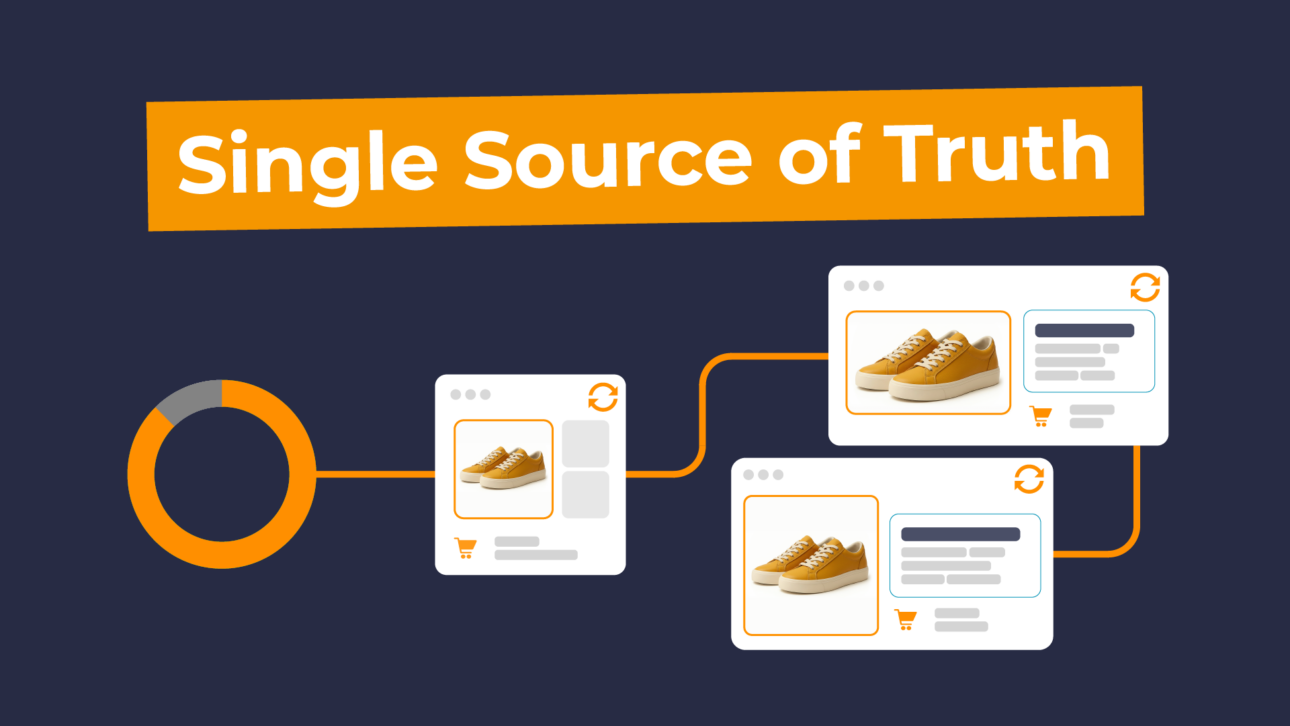
You launched a product and three channels showed three different versions of it: price, description, and images didn’t match. This happens when product content and data live across multiple systems that don’t update each other. A single source of truth solves the problem at its root: one place where data or content is changed, and from which every channel receives it automatically. In this article, we look at how it works in practice, what sets it apart from a PIM or DAM left to operate independently, and how to build one.
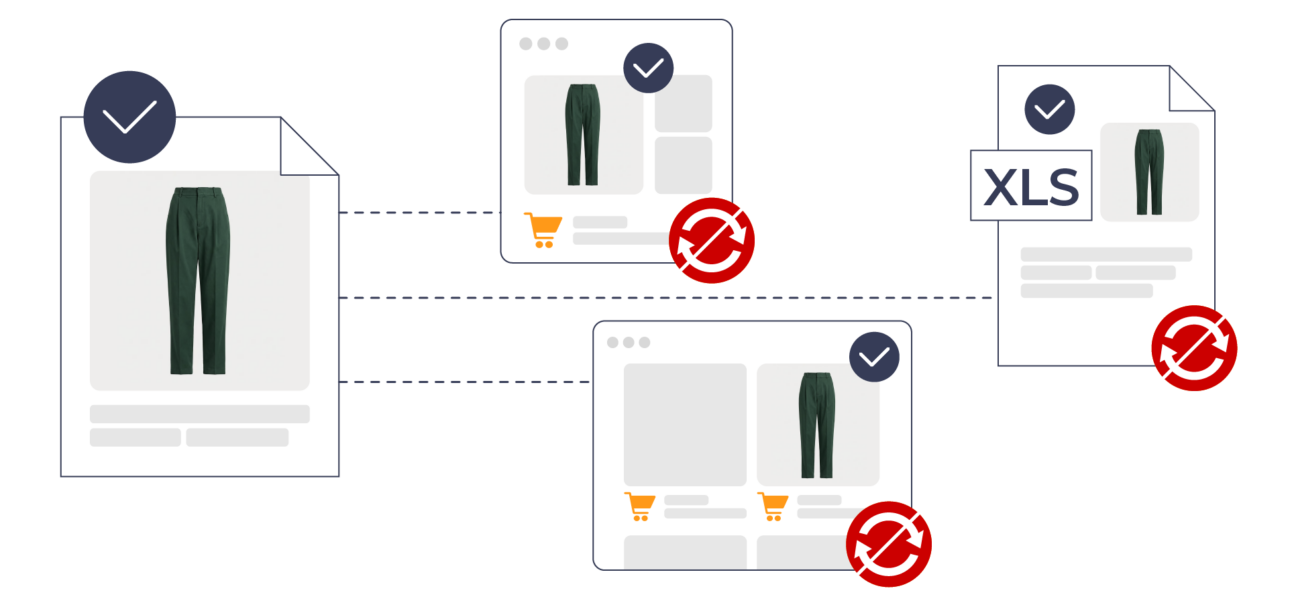
Product data management breaks down when information gets updated in only one place. The price changes in the ERP but not in the online catalog, or a new size lands in an Excel file that nobody else ever opens: the data is no longer a single version of the truth.
The problem affects every team working on the catalog, from product to eCommerce, each holding its own copy of the same information updated at different times. This happens more often in catalogs with hundreds of SKUs and multiple markets: more sources mean more opportunities for things to fall out of sync. A customer who notices that prices vary from one channel to another loses trust. The solution is to have everyone working from the same truth.
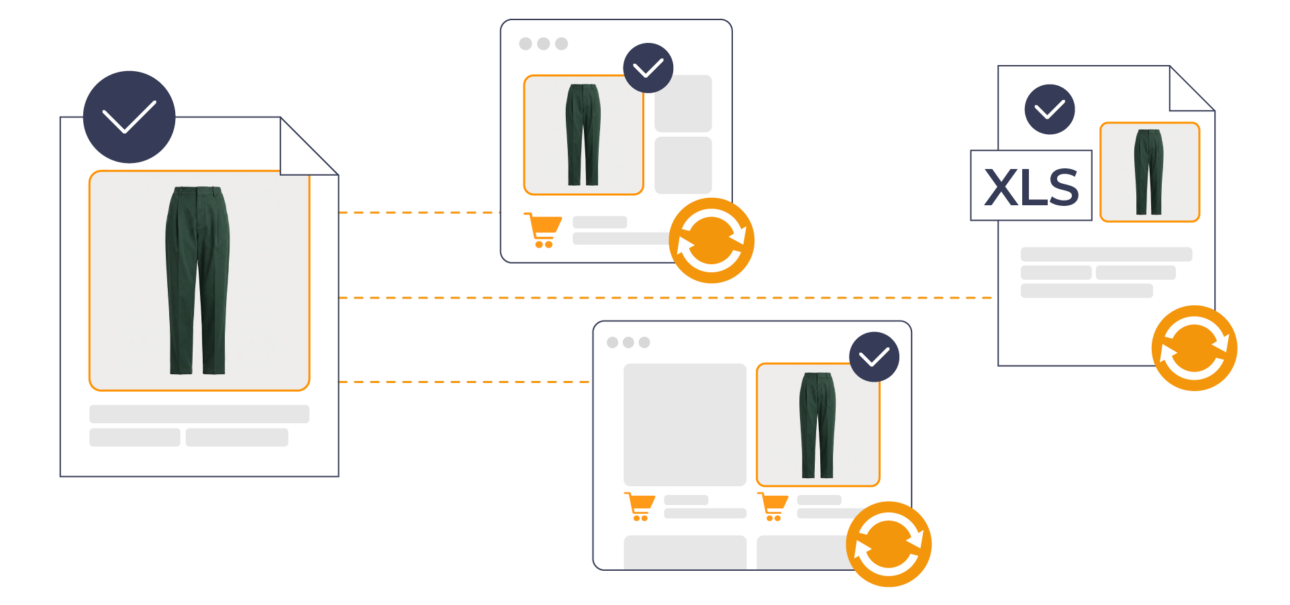
A single source of truth works on a simple principle: an attribute or asset is edited in one place only, and from there it is automatically distributed to every connected system. Change the price of a SKU once, and that same price appears on eCommerce, marketplaces, and printed materials at the same moment.
Each channel reads the updated data as soon as it is saved, automatically, with no exports or manual handoffs between departments.
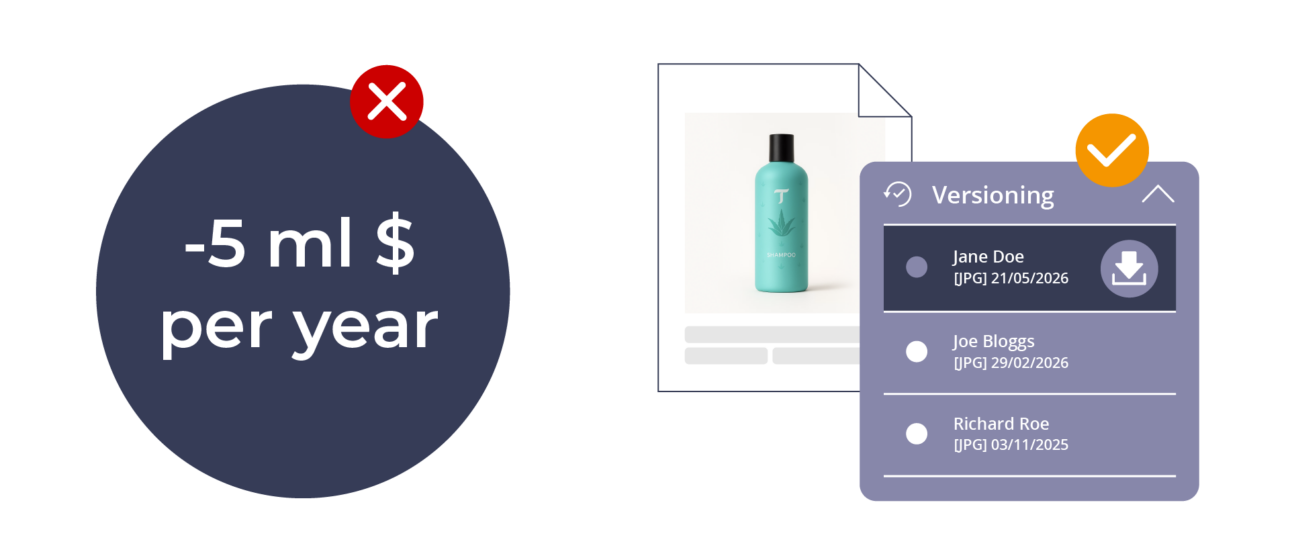
In industry terminology, MDM (Master Data Management) refers to the set of rules that make a single source of truth possible: who can edit an attribute, in what format, and which version remains the official one when two people work on the same data at different times. These are governance rules, not a separate piece of software: they are applied on top of the systems a company already uses, including PIM and DAM.
According to a 2025 report by the IBM Institute for Business Value, more than a quarter of companies estimate they lose over $5 million a year due to poor data quality, and 43% of operations leaders consider it their top data priority. For a product catalog, this translates into delayed launches and returns driven by incorrect information.
With a single source of truth, an update in the PIM and one in the DAM always describe the same product, across every channel: from the dedicated reseller portal to eCommerce.
When the two systems don’t communicate, the opposite happens: the eCommerce team updates a description in the PIM, the creative team uploads a new photo in the DAM, and the channel publishes the new copy with the old image, or the other way around.
This gap between the two systems closes when a single platform holds both data and imagery together, rather than keeping them separate. The same applies in reverse: an image updated in the DAM but archived years earlier under a name nobody remembers anymore sits unused precisely when it’s needed.
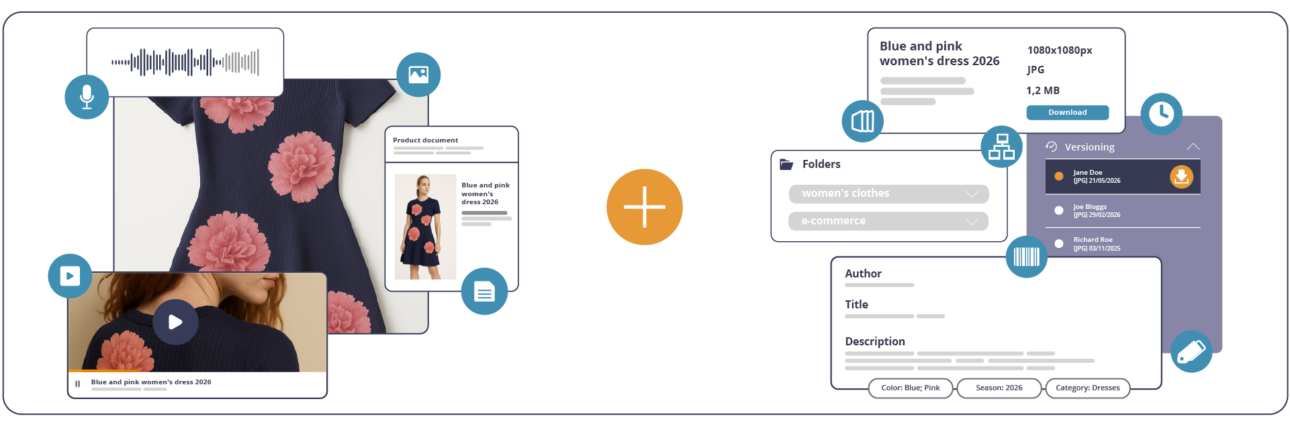
Most teams notice these after just a few months of working on the catalog, almost always without connecting them to each other.
These are not isolated mistakes: they are a sign that there is no system keeping data, rules, and channels in one place.
A platform that natively combines PIM and DAM capabilities to manage both data and digital assets addresses exactly the signals described above, without requiring a separate MDM system.
Platforms like THRON close the gap from the earlier example: the same product sheet holds both attribute and image together, updated from the same source. Attributes, families, and variant hierarchies are built with a visual editor, with no dependency on development.
The catalog updates by importing data from ERP, PLM, or Excel in a single step, and a monitoring system flags what each product sheet is missing before it goes live, channel by channel: the incomplete page discovered only at the returns stage, one of the warning signs described above, stops being a risk.
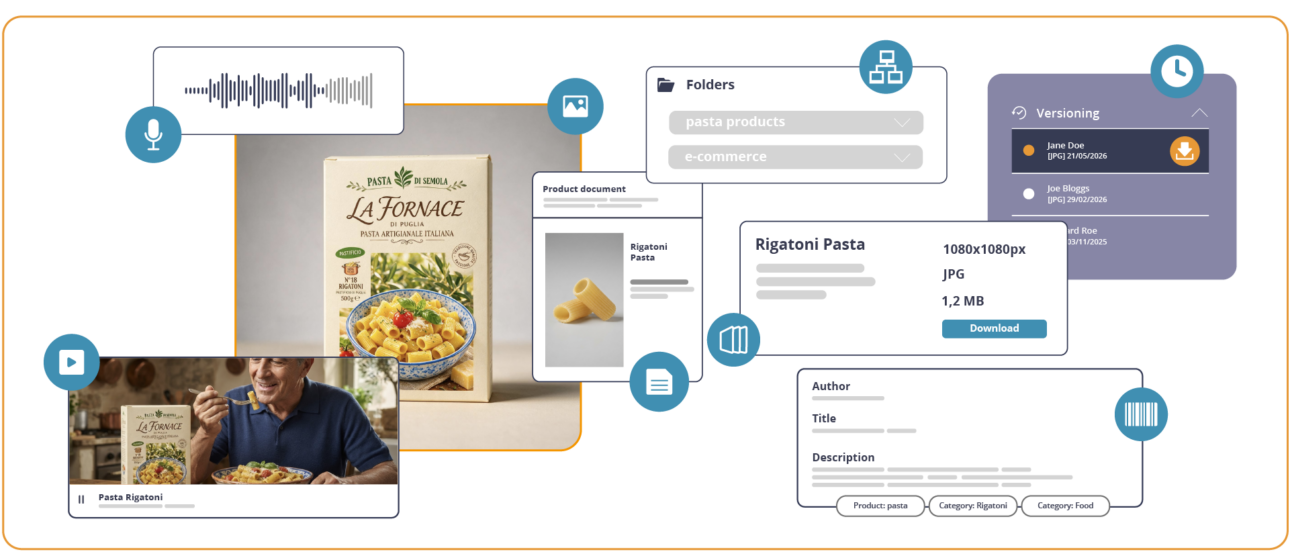

It is the one authoritative source from which every team and every channel draws product information, always up to date and consistent, rather than maintaining parallel copies that gradually fall out of sync.
MDM establishes who can edit an attribute, under what rules, and which version remains the official one when multiple people work on the same data at different times.
Because without a native connection between data and assets, each system remains the source of truth for only part of the information: data on one side, visual content on the other, with the risk that the two drift apart over time.
Start by mapping your current data sources and defining an attribute model shared across all teams. Only then should you choose the platform best suited to support it.
PDM, or Product Data Management, handles technical engineering data such as CAD drawings and bills of materials. The name sounds similar to PIM, but its scope is engineering rather than multichannel publishing.