Language

Product information from every system: aggregated, standardized, and adapted for every channel, powered by AI.
Chosen by





















Data scattered across ERP, PLM, suppliers, Excel, and legacy systems, each with its own format, its own logic, and its own inconsistencies. Incomplete product sheets, unsynchronized channels, and an eCommerce team that spends its time chasing information instead of optimizing conversions.
The Product Information Library is the area of THRON Platform that:
collects product information from every source, structures it with AI, automatically fills in what’s missing, and maintains consistency across every channel.
Forrester Research has calculated an average ROI of 208% for companies that adopt THRON.
The data you already have, from every system, unified in a single source of truth.
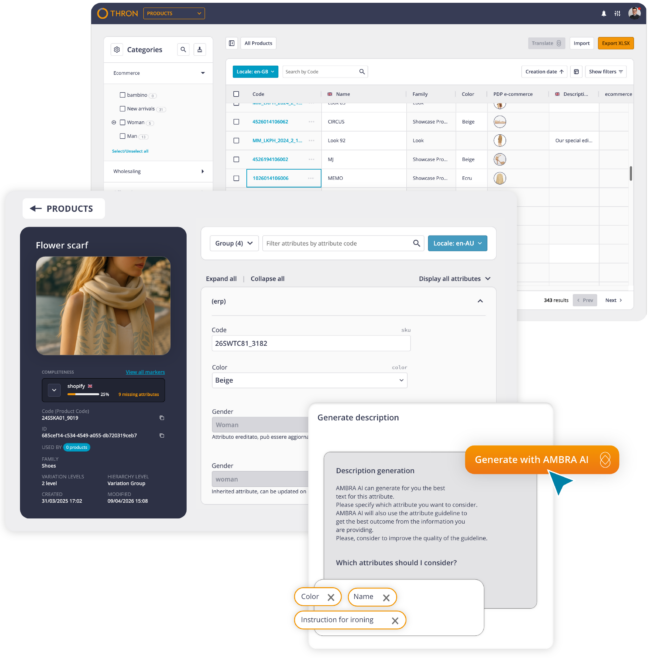
AMBRA AI completes, enriches, and localizes product sheets for each channel.
A single update goes on all touchpoints, with no custom integrations needed.
THRON Platform connects to ERP, PLM, legacy systems, supplier portals.
Data flows automatically into a single repository, aligned with the corresponding digital assets and ready to be processed. Companies already running an existing system can start working immediately while gradually migrating their catalog, with no operational disruptions.
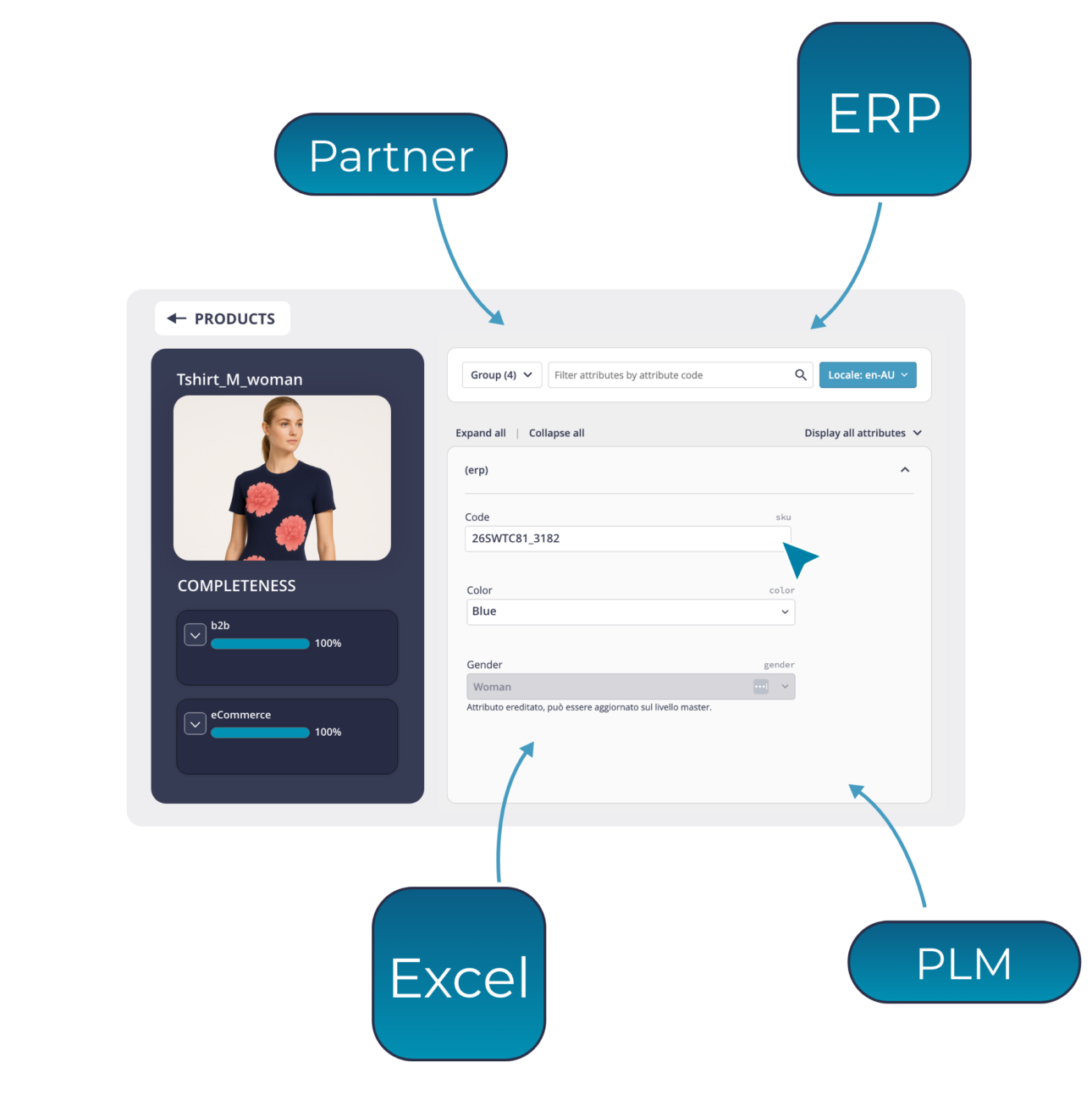
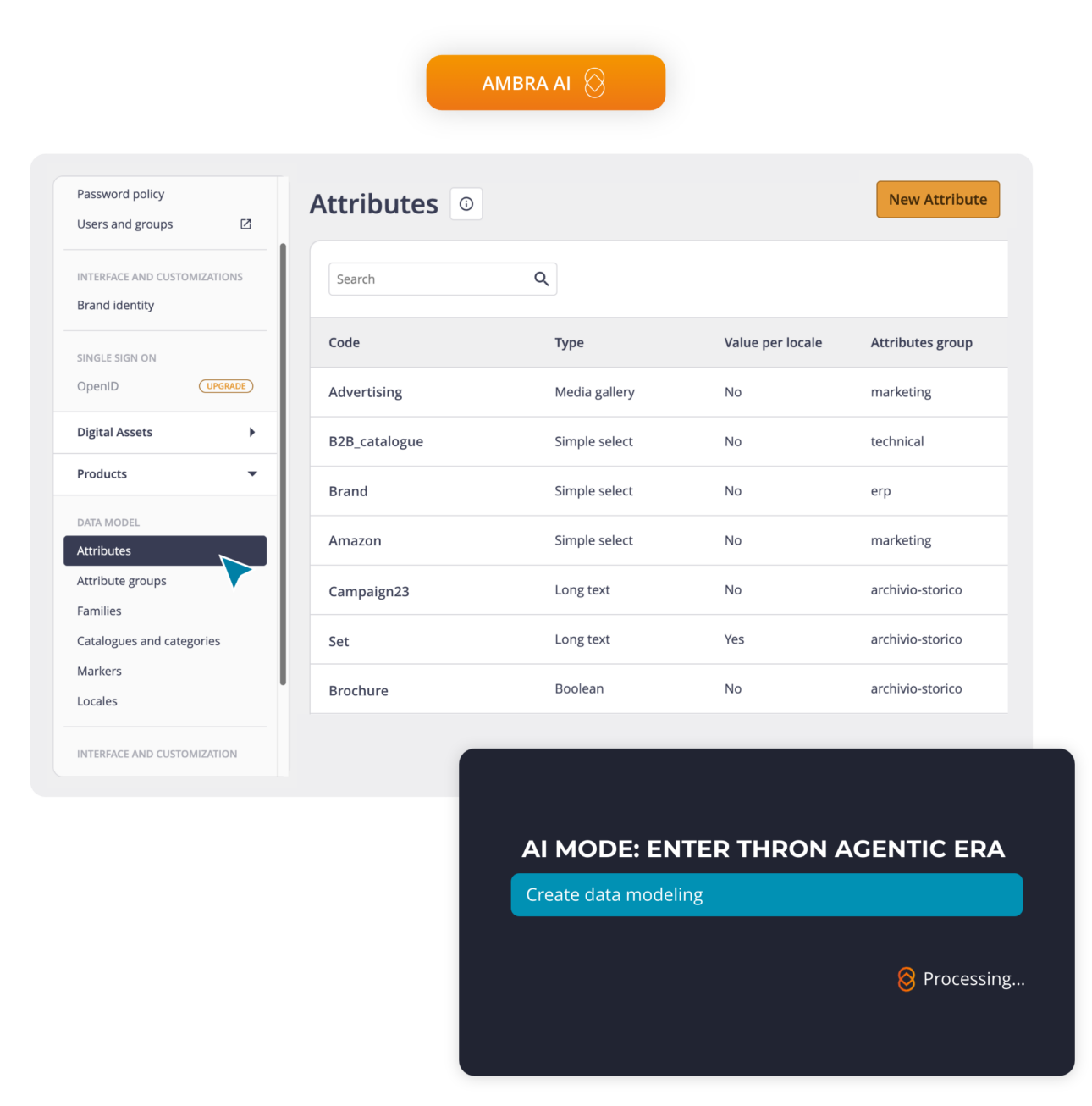
The artificial intelligence analyzes existing data, suggests the optimal catalog structure, and normalizes formats from different sources.
The data model grows with the business: families, attributes, variants, and product relationships are redefined as markets evolve or the catalog expands, with no need to reconfigure everything from scratch. From days of configuration to a few hours.
Every piece of product information is automatically enriched with the assets that represent it: images, videos, technical documents, and market-specific variants.
When specifications change, the connected content updates accordingly. eCommerce teams find the images already linked to the product sheet, in the correct version. No manual associations, no misalignment.
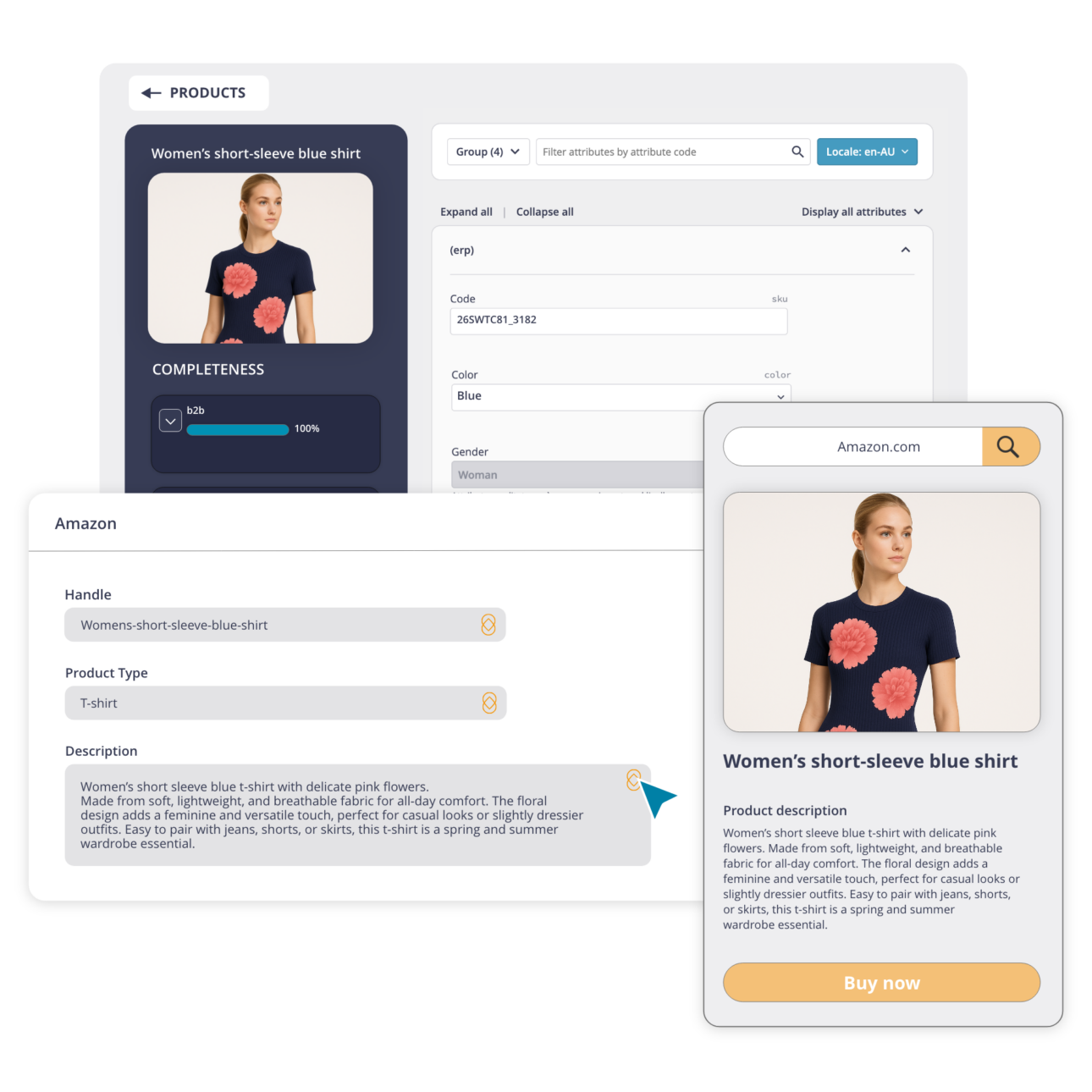
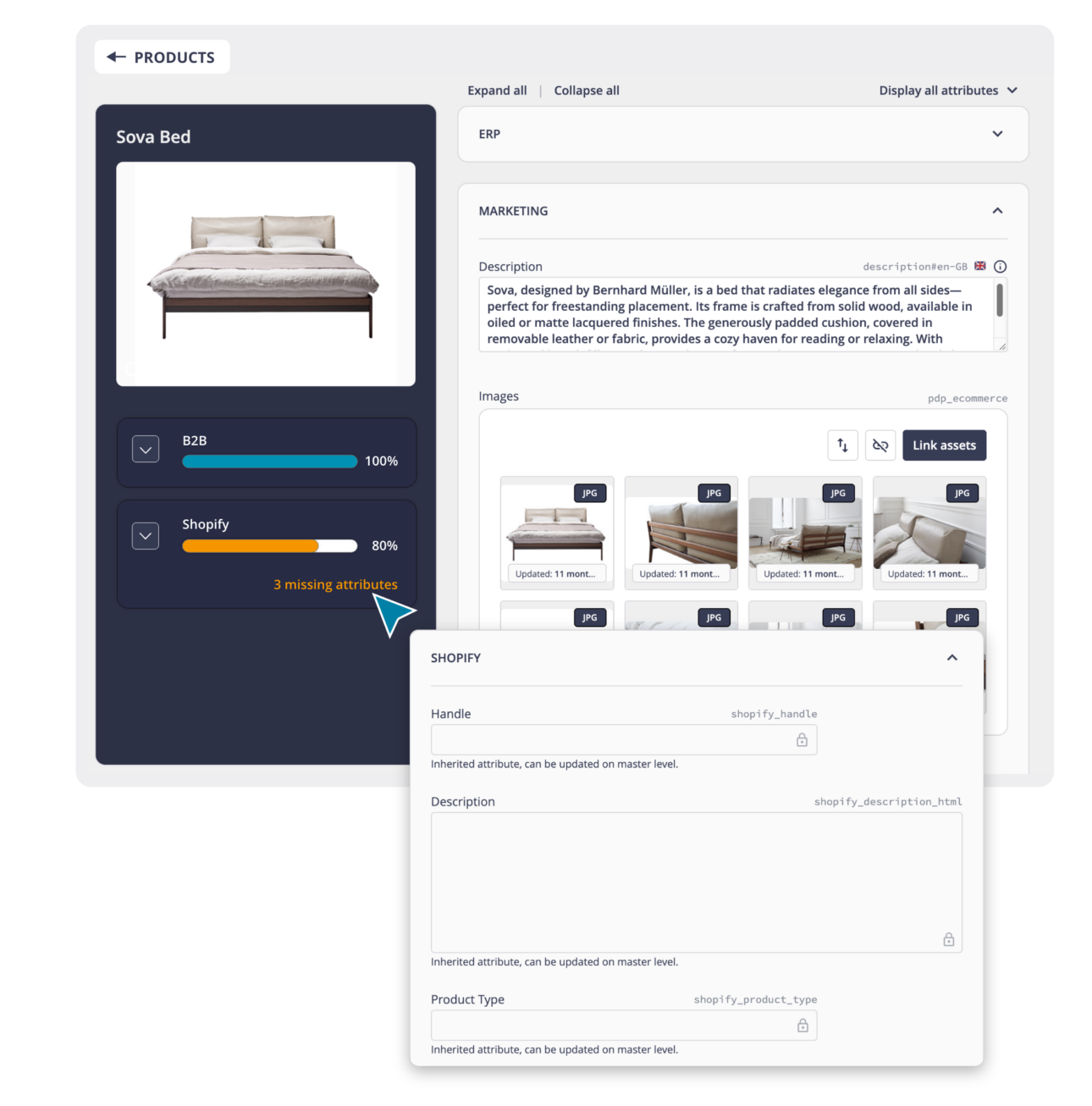
The platform tracks the status of every product sheet in real time: empty specifications, missing translations, unlinked assets, incomplete data for channels.
And it doesn’t stop at flagging issues: it generates tasks that can be assigned directly to the relevant teams, with configurable workflows by process and department. Anyone who needs to complete a sheet receives all the information they need, or can delegate the work to AMBRA AI.
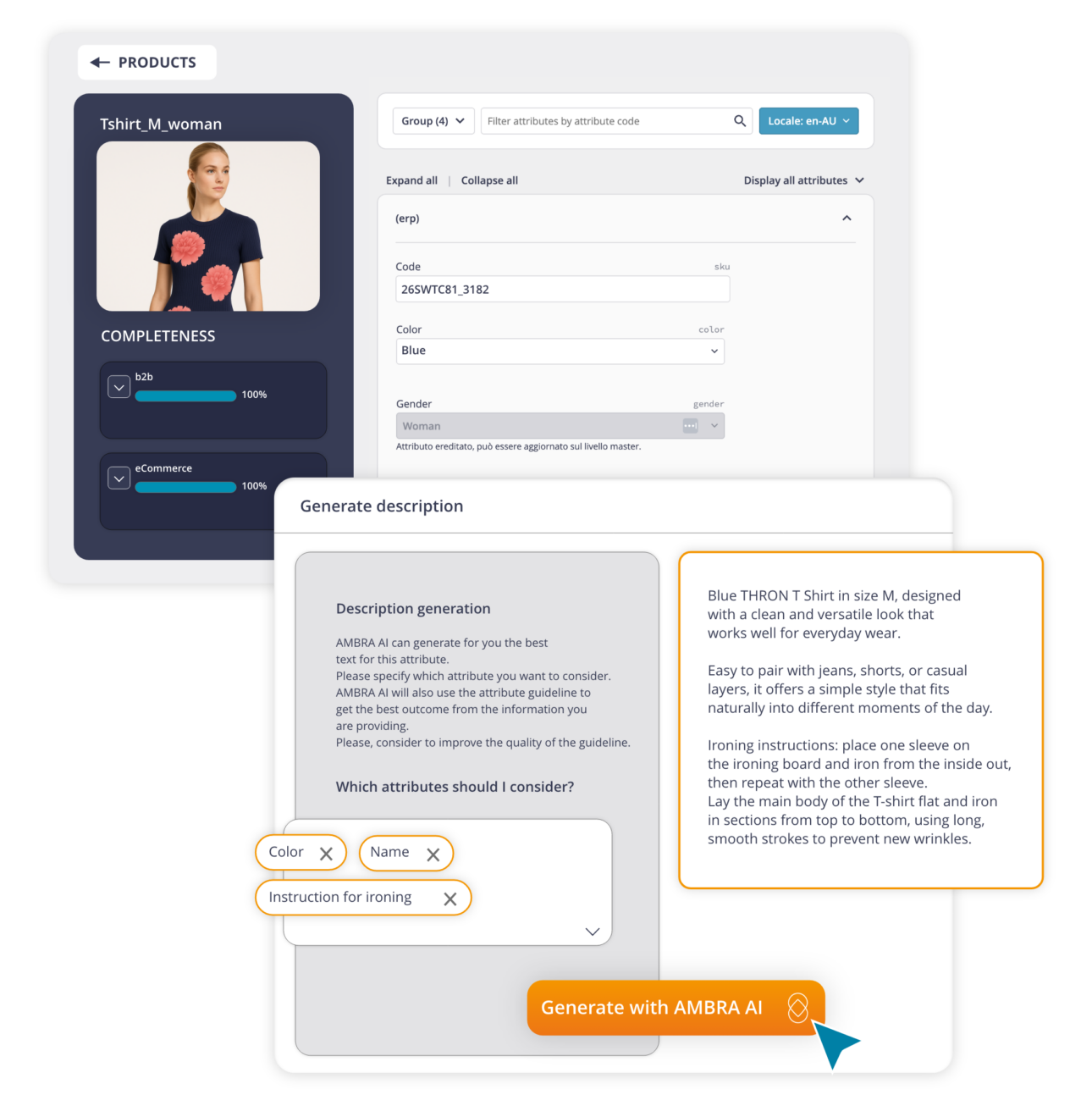
Where descriptions, localized versions, or alt text and subtitles for accessibility are missing, AMBRA AI generates them from product attributes in bulk, automatically and with full configurability, while respecting the brand’s tone of voice.
The same logic applies to technical sheets and PDFs: generated automatically, always up to date, and ready for both B2C channels and B2B distribution.
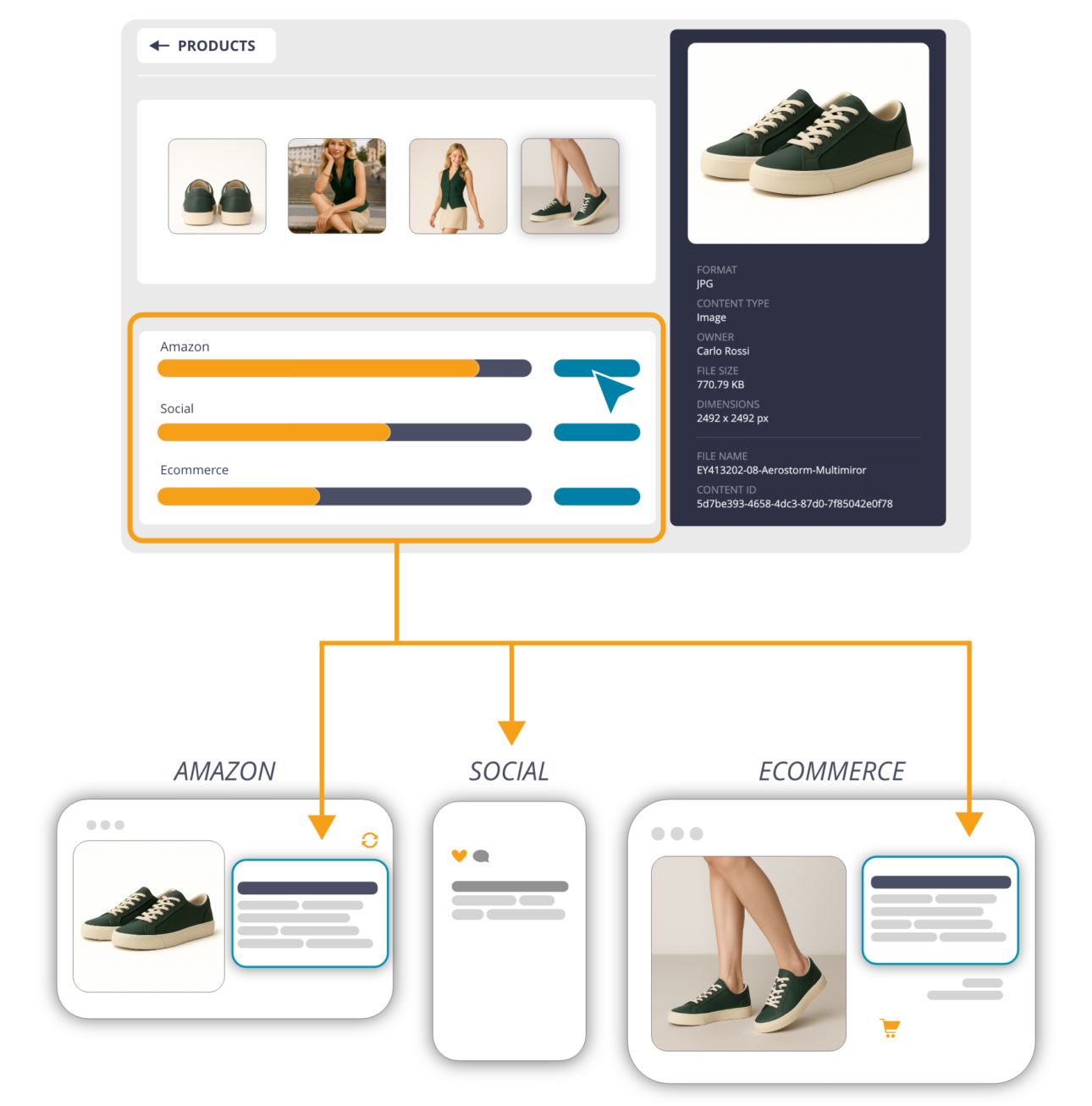
Every change to a product sheet distributes automatically to eCommerce platforms, marketplaces, B2B portals, and every touchpoint, with channel-specific attributes in the language of the target market.
Data and assets publish together: backgrounds, resolutions, and colors adapt automatically to each context, as do videos, which are made available in the best format for each channel.

SUCCESS CASE
.
Put it to the test on your real archive in one hour. 30 days, free.
Can THRON be classified as PIM software?
Not exactly, and the distinction is substantial. THRON does everything a traditional PIM software does, but it doesn’t stop there. The Product Information Library is natively integrated with the Digital Asset Library and the Channel Activation Layer within the same platform: product data and digital assets live together, update together, and are distributed together, with no custom integrations between separate systems. It’s not a tool for a single department: every team accesses the catalog in their own context, with the right permissions.
What are the limitations of traditional PIM software?
Traditional PIM software centralizes product data but creates bottlenecks on two fronts. The first is infrastructural: connecting that system to an asset management solution, an eCommerce platform, marketplaces, or B2B portals requires separate integrations that must be built, maintained, and updated with every version change. The second is organizational: data remains the territory of a single team, and anyone working in other departments has to request access or make do with outdated copies. THRON solves both problems within the same platform.
Are product information and digital assets connected in THRON?
Yes, natively, and that’s one of the most concrete differences compared to a PIM software that requires a separate solution for assets. In THRON, the Product Information Library and the Digital Asset Library live on the same platform: every product sheet is linked to the assets that represent it. When a specification changes, the connected content updates. When a new image arrives, it is associated with the corresponding sheet without any manual intervention. A product sheet without the right image is an incomplete sheet; in THRON, the two simply cannot be separated.
Does THRON also replace the digital asset solution, in addition to PIM software?
Yes. Where others require a PIM software and a separate system for assets, with custom integrations to make them communicate, THRON integrates both natively into a single platform. Product data and digital assets live in the same system, always in sync. Fewer vendors, fewer contracts, and a 55% reduction in IT costs.
How does AI work in THRON compared to other PIM software?
In traditional PIM software, AI is a module added on top of the existing platform: it has to be selected, configured, integrated, and often trained separately. In THRON, AI is architectural, not an optional component. AMBRA AI works with the entire content library from day one: it enriches product sheets, generates descriptions, translates, models taxonomies, and tracks completeness with no preliminary configuration needed. The difference shows in practice: there’s nothing to set up, it just works.
What is the real TCO of traditional PIM software compared to THRON?
The TCO of traditional PIM software, especially open-source, rarely matches the cost of the license. Implementation through a system integrator, custom development for every specific requirement, ongoing maintenance, manually managed updates, and dependency on external partners all drive the total cost up over time in ways that are hard to predict. With THRON, the subscription includes the platform, updates, hosting, and support. Forrester Research has calculated an average ROI of 208% and an average payback period of 8 months based on real customers.
How long does it take to see real results after adopting THRON?
Much less time than with traditional PIM software. A project based on open-source or custom solutions requires analysis, development, configuration, and testing: timelines are measured in quarters. THRON is up and running in weeks, thanks to native connectors, AI that is ready to work on your content from day one, and data models configurable through the interface with no IT involvement. For those who want to measure the benefits before committing, THRON offers a 30-day proof of value on your real catalog, with an exit clause included.