Language

The new Automation Studio automation brings large scale generation of product descriptions, applying it in a single controlled flow to batches of items and entire sections of the catalog.
The data already available in the product pages becomes the foundation to create short and long descriptions at scale. Only a few selection criteria and some instructions on tone and style are enough to obtain texts aligned with the brand voice and ready for all channels.
Those configuring the flow can:
specify up to ten product fields to use as a basis for generation
define the language to work in
add simple instructions on tone, structure and key points in the prompt
launch generation on tens or thousands of items and review the result before applying it.
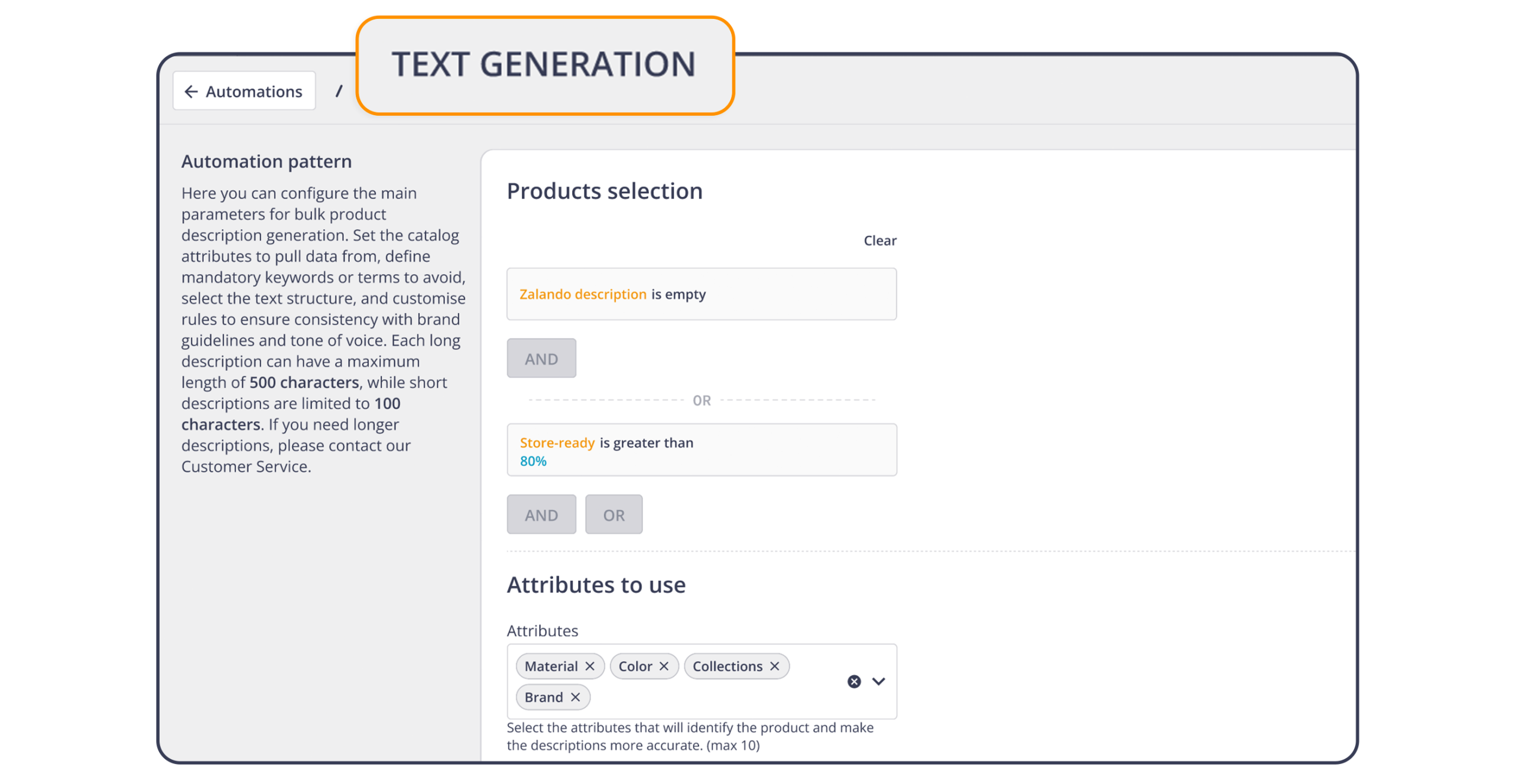
The new automation, available in dependency with AMBRA AI, significantly reduces the time devoted to manual writing of descriptions, increases communication consistency across the entire catalog even as volumes grow and helps maintain quality and adherence to brand guidelines thanks to the instructions entered in the prompt.
In this way marketing and eCommerce teams publish and update product pages faster, maintain consistency across lines, categories and languages and devote more energy to strategic activities such as campaigns, creativity and new launches.
For example, whoever manages the e commerce can create a dedicated marker and ask the automation to act only on products that for that marker have a completeness greater than or equal to 80%, that is, with name, colour, size, materials and gender already filled in and the description field still empty. The result is descriptions that are always ready, consistent with the company style and generated through a fast, controlled and sustainable process for the teams involved.
When marketing, content and external agencies work together, the same product enters many different projects, from digital channels to sales materials. With the new evolution of Product Workflow, the product can be included in several active jobs at the same time, so shootings and productions for different channels can move forward in parallel.
The product remains a single record in the platform, while the connected flows progress in a coordinated way.
Within Product Workflow, multi job management makes it possible to:
use the same product in several jobs at the same time, so teams can work in parallel on the same items
immediately see, through an informational message in the interface, whether that product is already involved in other jobs
keep statuses, progress and notes separate for each job, so that each flow follows its own stages and priorities
preserve a single source of truth for the product, with history and responsibilities always easy to read.
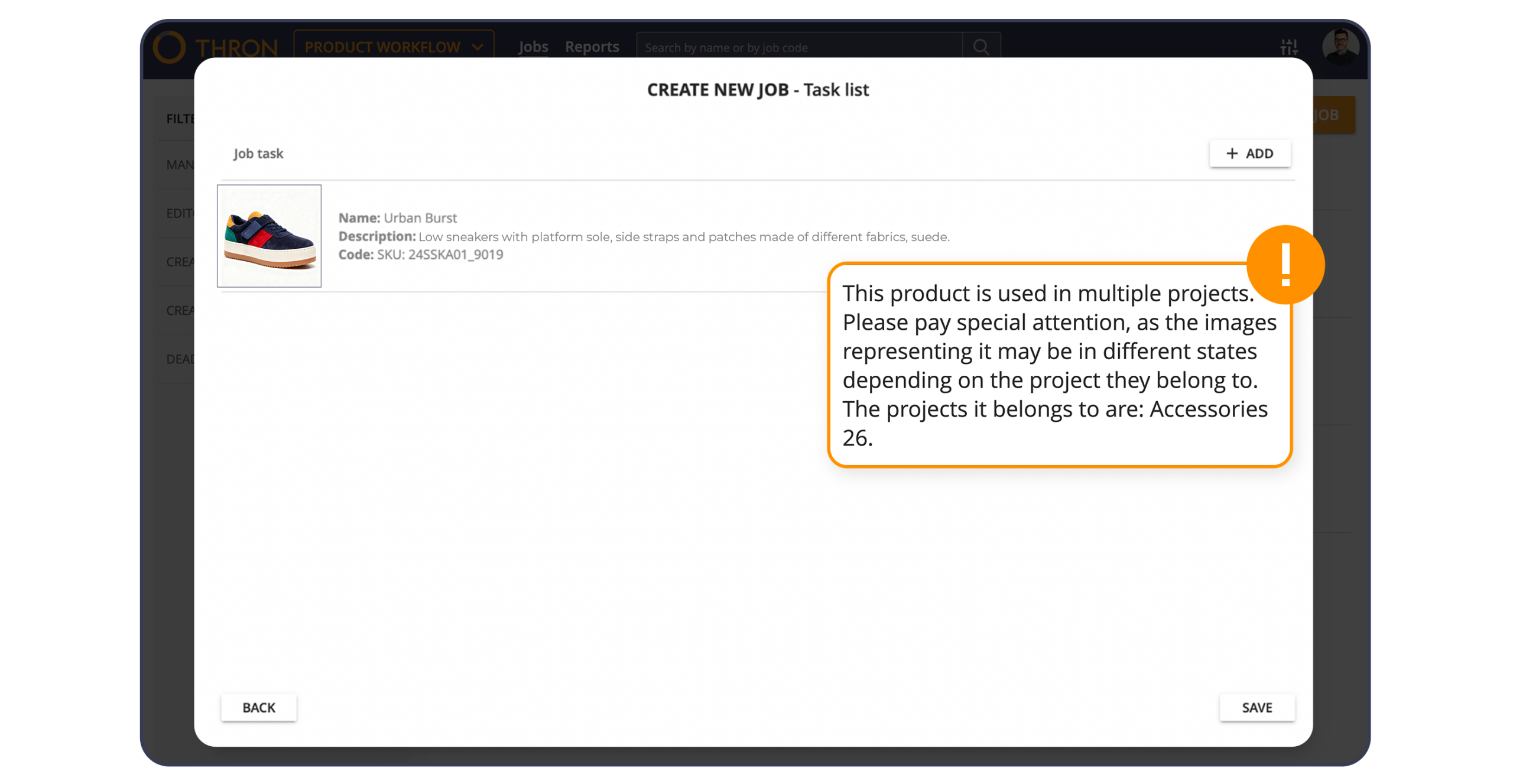
This evolution expands the scope of use of Product Workflow, especially in large catalogs and in seasons with many initiatives running in parallel. The transition from planning to publication is shortened thanks to better synchronization between those who plan, produce content and approve, while independent statuses and notes for each job keep the responsibility for each step always clear.