Language

Brand guidelines are the rules governing logos, colors, fonts, and tone of voice that keep a brand consistent across every channel. Traditional DAMs present this as one of their features, ready to activate alongside everything else.
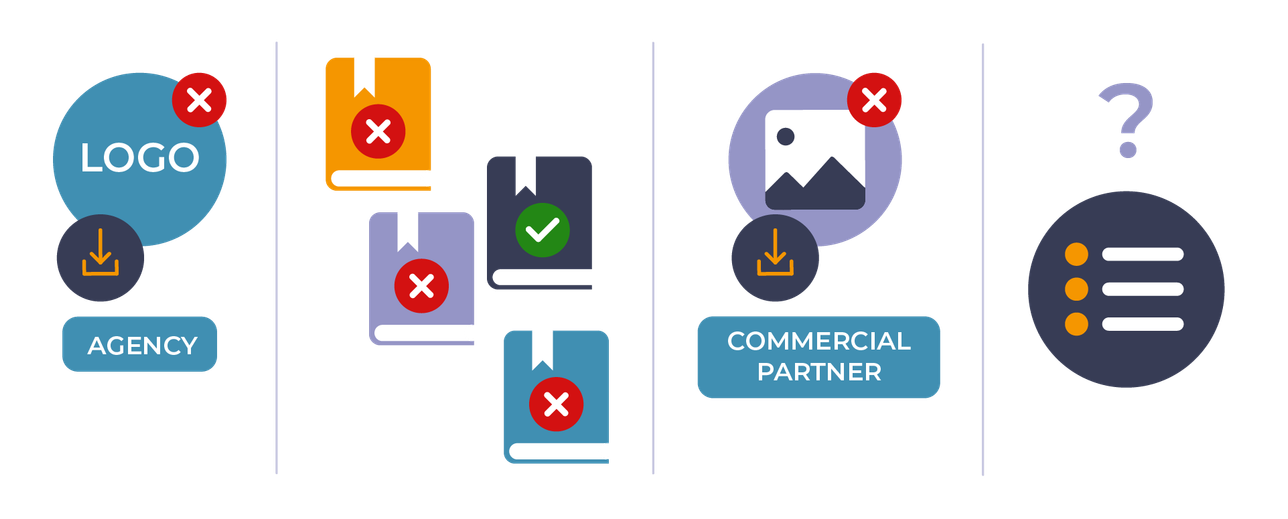
In practice, though, it often happens that the agency keeps using the old logo, the brand manual is still a PDF uploaded once and never updated again, and nobody knows which version is the correct one. This article covers four of these situations, a data point that measures how widespread they are, and a real-world case from a company that has already solved the problem.
A brand manual ends up in a drawer when it stays a document instead of becoming a shared habit: someone writes it, very few people actually consult it, and nobody notices when a rule stops being followed. This happens almost everywhere, because keeping it alive takes more energy than writing it in the first place.
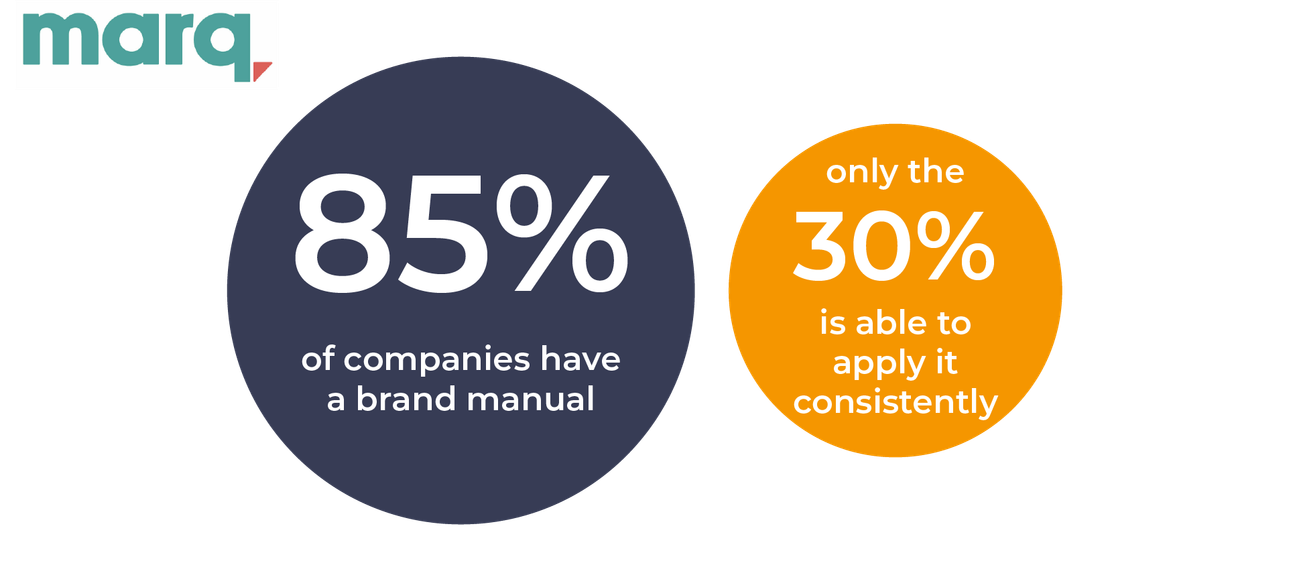
According to research by Marq (formerly Lucidpress), 85% of companies have a documented brand manual, yet only 30% manage to apply it consistently across all channels. Writing the rules and enforcing them are two different jobs, and the second one takes more time and attention than the first.
Anyone working with multiple markets, multiple teams, and multiple external partners will recognize at least one of these situations, and often more than one at the same time:
These situations are all different, but they almost always stem from the same root cause: nobody knows for certain which version is the right one, or who should be making that call. The problem just sits there until someone eventually notices.
Many DAMs present integration with a Content Delivery Network (CDN) as proof of omnichannel capability: the same file reaches anywhere in the world within seconds. A CDN does its job well when it comes to delivery speed, but it does not control who can see a given version or what format it should arrive in. Two examples illustrate the difference:
Brand consistency requires controls over who accesses what, and automatic adaptation to the right format for each channel: two things that delivery speed alone cannot solve.
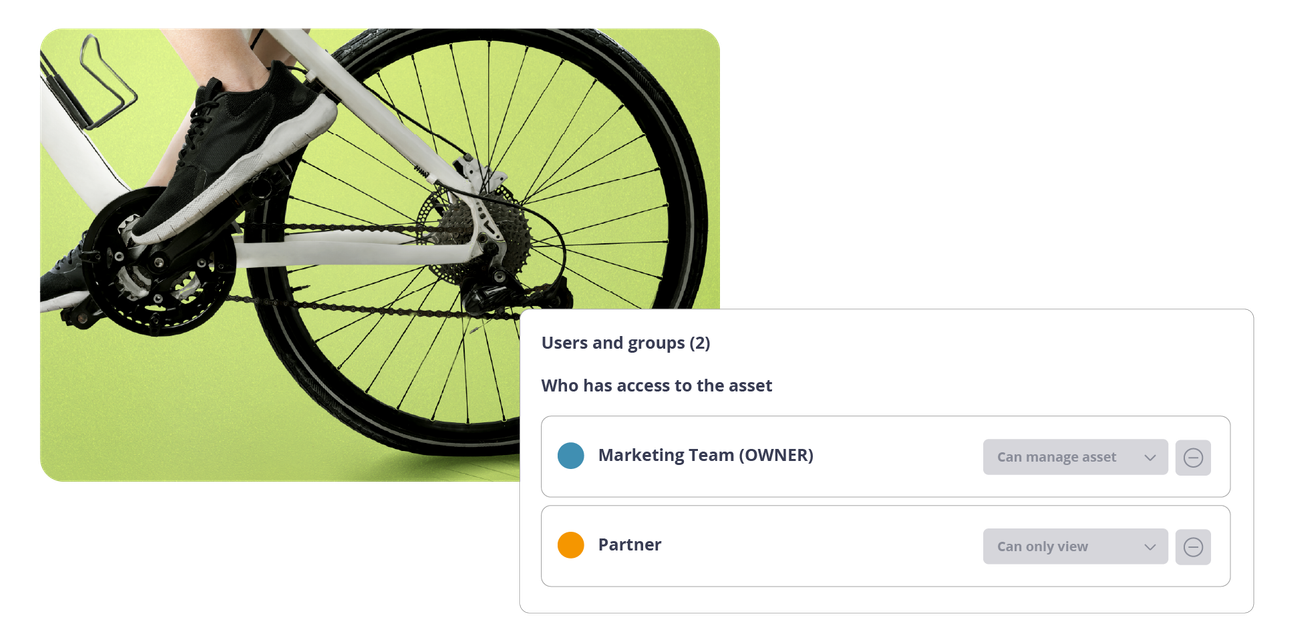
Companies managing multiple markets rarely need new rules: they need to know who updates them and who can access them at any given moment. This is a responsibility that almost no one assigns explicitly, even when the original document is well written.
The practical answer is a single source, updated in one place, that propagates automatically across every channel, team, and market. Without this, all you are left with are good intentions written in a document, with no one to keep them alive over time.
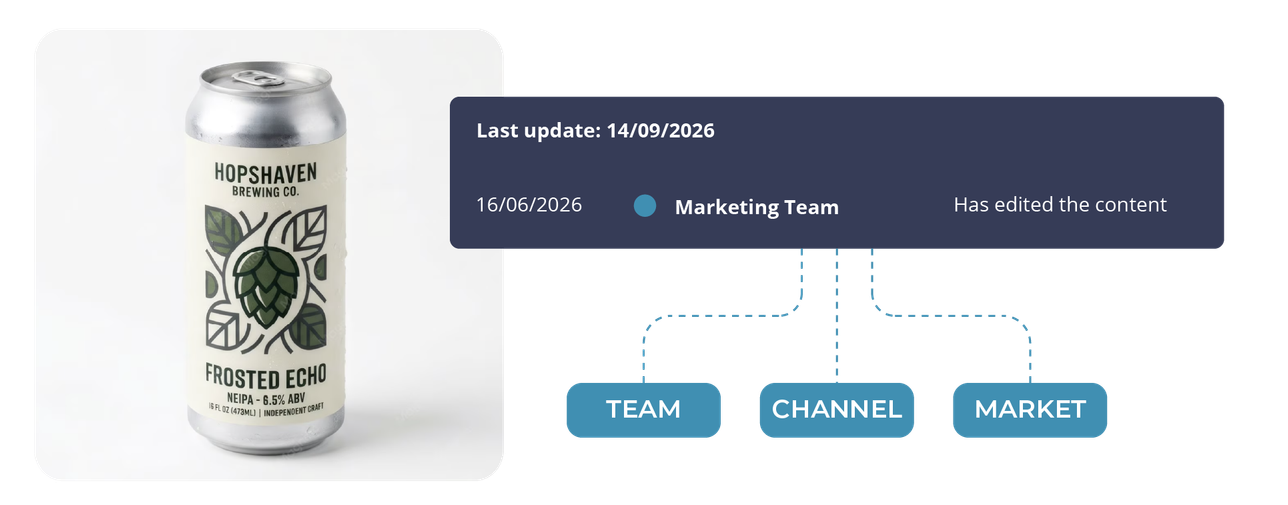
A brand and style guide stays consistent only if everyone who consults it always finds the same version, regardless of when or where they download it. This means having a browsable version history: if the agency in the first example is still using the old logo, the history makes it possible to trace when that copy was uploaded and by whom.
It also means role-based access: whoever edits, whoever views, whoever downloads for external use, each with the permissions they need and nothing more. The same applies to format: every asset should adapt automatically based on the channel, rather than having the same file circulate for all uses. A platform like THRON addresses all of these areas, but the principle matters more than whichever tool you choose.
It is worth asking this question every time you evaluate a system for brand consistency: who updates the live version, and who can see it?

They are the rules governing logos, colors, fonts, and tone of voice that keep a brand consistent across every channel. Most DAMs present this as one feature among many; with a platform like THRON, it can become a system that is updated in one place and automatically applied everywhere.
Graphic guidelines typically cover the logo and color palette. A brand manual is broader: it includes tone of voice, image usage, and rules for applying the brand across different materials, from digital to print.
A document stays fixed at whatever version it was saved at. With THRON, for example, the active version is updated in a single location and distributed automatically across every channel, so outdated copies are taken out of circulation.
It depends on the role: someone who edits needs different permissions from someone who only views, or from an external partner downloading for commercial use. THRON assigns each role distinct permissions for reading, editing, or downloading.
A CDN guarantees file delivery speed. Consistency requires more than that: controls over who can see a given version, and automatic adaptation to the format each channel requires.
By centralizing the active version in a single access point, with an available change history and clear permissions over who can make changes. On THRON, this means one source, updated in real time for every team involved.
The right frequency depends on the company: it makes sense to revisit them whenever something significant changes, such as entering a new market, a partial rebrand, or the addition of a sales channel that did not previously exist.