
Any communication project, from multichannel campaigns to managing product sheets for eCommerce and catalogs, relies on a series of content items, often called digital assets, which need to be easily retrievable and reusable.
This article clarifies what we mean by digital assets, why they matter for companies and brands, and what guidelines to follow for managing them systematically: saving time and resources.
According to Gartner, digital assets are content stored in digital format that can be uniquely identified, which brands and organizations use to create value. In other words, for Gartner, digital assets are all those media files that companies create to communicate, promote their brand, or sell their products.
The value of a digital asset lies in its ability to influence how people perceive products and services, building the brand’s identity and business activities throughout the entire buyer’s journey.
Given this perspective, what’s the difference between a simple file and a digital asset? A digital asset is enriched with information that ensures its discoverability, distribution control, and reusability over time.
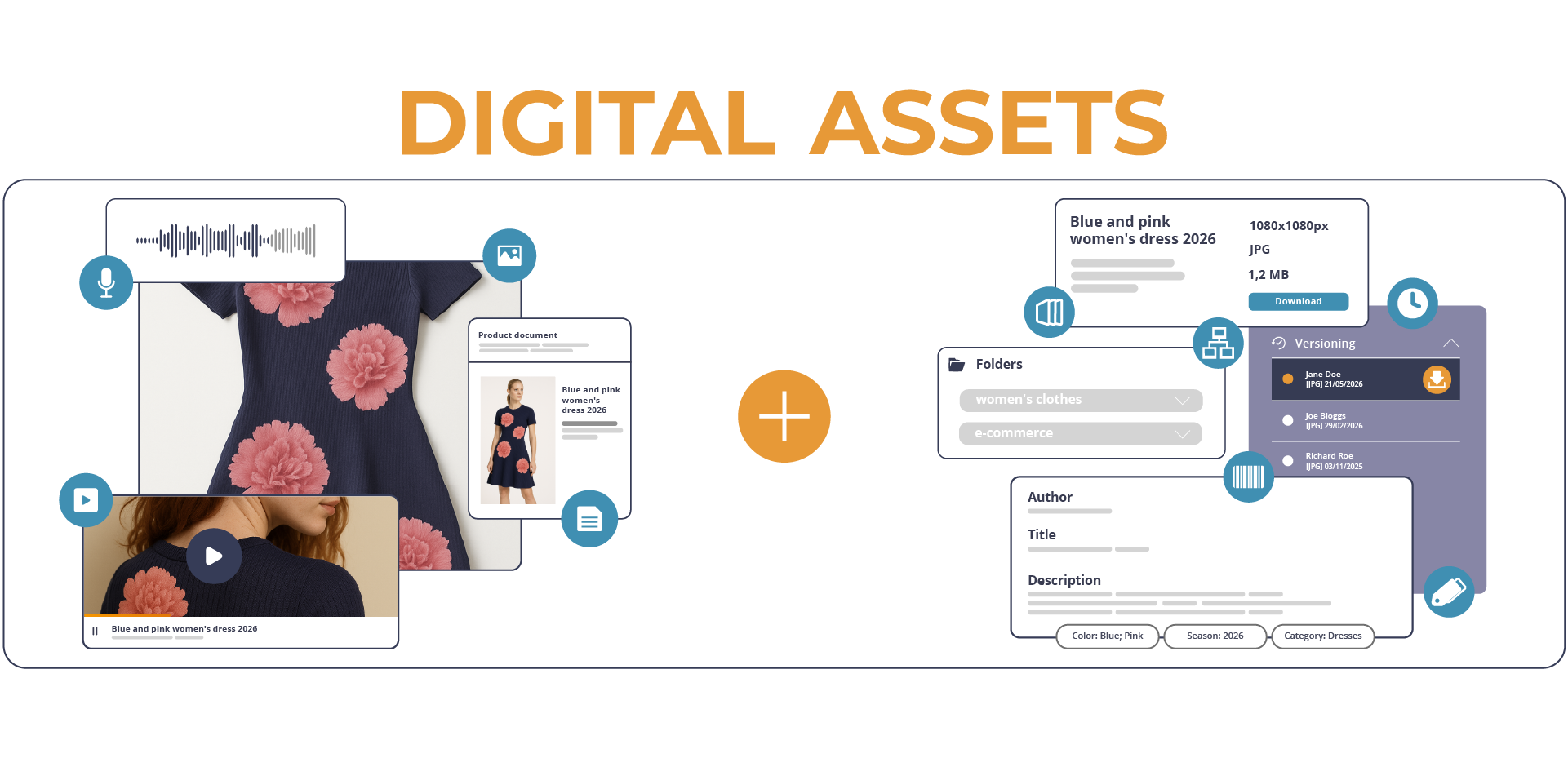
Its full potential emerges when it’s described in a structured way, through information like metadata and attributes. When digital assets are described, organized, and accessible, they become shared digital assets capable of supporting all business functions and communicating their value to the market.
Precisely because of the inherent value digital assets have for the company, it’s essential that they be managed correctly, enabling effective reuse and ensuring that teams and partners always have access to the most up-to-date version.
Companies develop and manage hundreds of digital assets, but the main types include:
Now that we understand what digital assets are, it’s crucial to explore why they matter for companies, brands, and organizations.
Their value lies in the context of use. Digital assets help companies and brands build relationships with their customers as they represent the company itself: its commercial offering (products or services) or the brand, understood as identity, culture, and values.
These relationships happen primarily on digital channels, from websites to eCommerce, from social media to online advertising platforms.
The value of digital assets also lies in the effects that their management entails: weak and fragmented management leads to publishing errors, outdated versions, delays, and inconsistency. Conscious digital asset management, on the other hand, has tangible benefits for the entire company, from Marketing to eCommerce, to IT:
Managing digital assets effectively means building a content library that functions as a single source of truth, with clear rules for organization, versions, permissions, rights, and distribution.
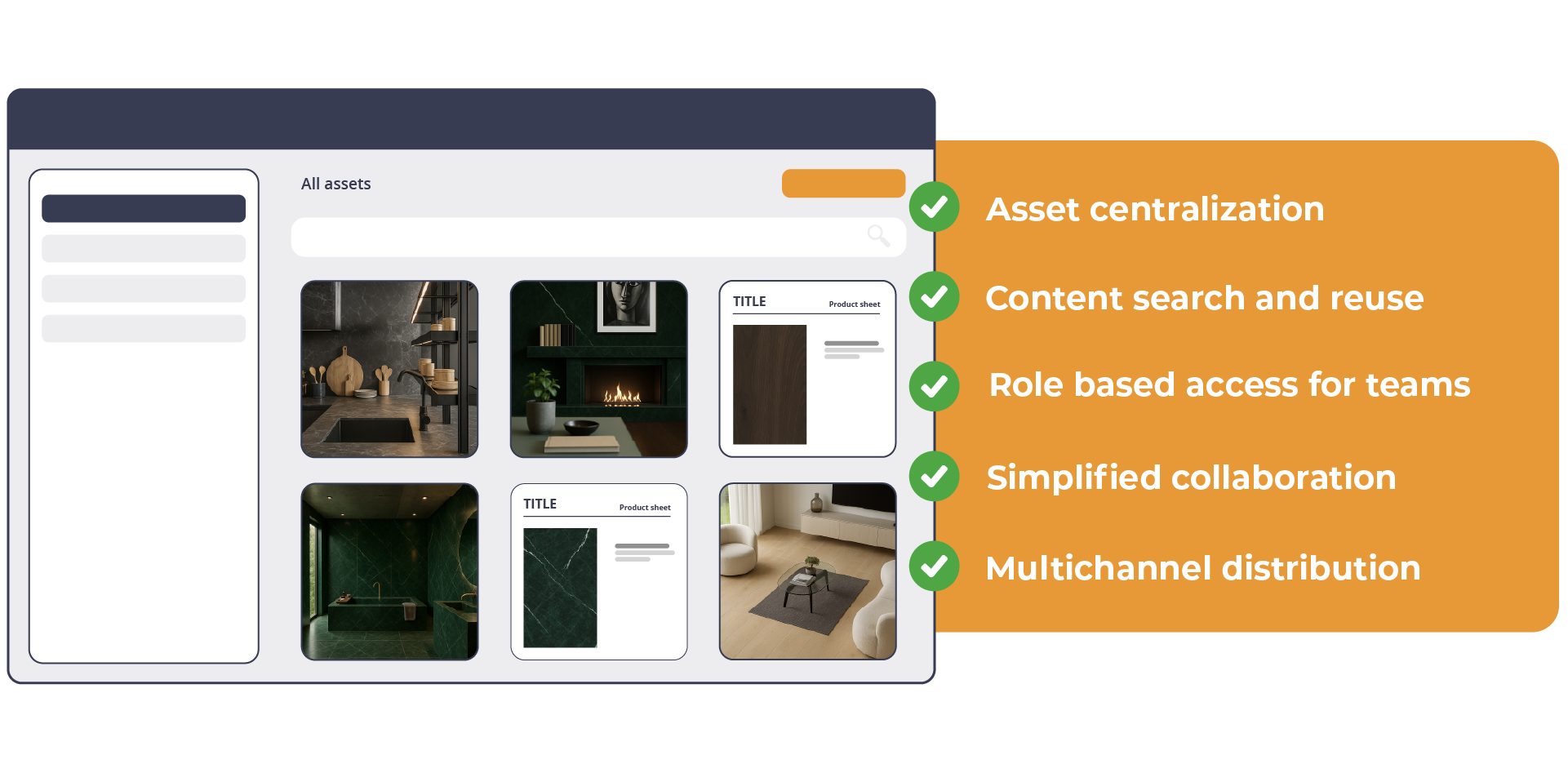
In this context, Digital Asset Management (DAM) software comes to our aid, platforms for storing, organizing, retrieving, and distributing digital assets in a controlled manner.
What is DAM software for and what are the benefits of adopting this type of platform?
When volumes of digital assets and the multiplicity of channels require it, DAM software like THRON can become essential to reduce duplication, simplify content reuse, govern rights and approvals, and keep teams and channels aligned.

What are digital assets?
They are content in digital format that can be uniquely identified, capable of bringing value to a company based on the context of use and must therefore be managed correctly to ensure their reuse by all departments.
What’s the difference between a file and a digital asset?
Unlike a simple file, a digital asset has value as a representation of a company’s products or services (or the brand itself), and as such, is capable of building relationships with customers across a variety of digital channels.
For this reason, a file can be considered a digital asset when enriched with informational elements—whether metadata, product attributes, or version history—that allow it to be classified according to specific logic and make it accessible, transforming it into shared digital assets for the entire company.
What is Digital Asset Management (DAM) software?
A DAM is a platform designed to store, organize, manage, and distribute all of a company’s digital assets across different channels. DAM software operates as a single source of truth, simplifying content retrieval and collaboration among departments, agencies, and partners.
Why does digital asset management matter to Marketing, eCommerce, and IT?
Marketing, eCommerce, and IT are the departments that benefit most from proper digital asset management, as they work daily with content, products, and integrations between channels and systems. Centralized and controlled management of digital assets reduces publishing delays and errors, fostering content reuse across departments and projects, brand consistency, and time-to-market.