What are Core Web Vitals and why are they important for SEO?
Core Web Vitals are a set of three key metrics defined by Google to measure the quality of user experience on a website: Largest Contentful Paint (LCP), First Input Delay (FID), and Cumulative Layout Shift (CLS). These metrics assess loading performance, interactivity, and visual stability. Google uses Core Web Vitals as ranking factors, so optimizing them is crucial for achieving higher positions in search results and improving user engagement.
What is Largest Contentful Paint (LCP) and how is it measured?
LCP measures how quickly the largest element (such as an image, video, or text block) above the fold loads on a web page. It is calculated based on the rendering time of this element, not just its download time. Google recommends an LCP of less than 2.5 seconds for optimal performance. You can measure your site's LCP using tools like PageSpeed Insights.
How can I improve my website's LCP score?
To improve LCP, optimize media files by resizing images, using appropriate formats, and compressing resources. Implementing a Content Delivery Network (CDN) can also speed up content delivery. Removing unused plugins and optimizing server response times further enhance LCP. THRON's Real Time Image Editor (RTIE) and CDN features help automate these optimizations for faster load times.
What is First Input Delay (FID) and how is it calculated?
FID measures the time it takes for a browser to respond to a user's first interaction, such as clicking a link or button. It is expressed in milliseconds and reflects the delay between user input and browser response. An FID below 100 ms is considered optimal. You can check your site's FID using PageSpeed Insights.
How can I reduce First Input Delay (FID) on my website?
Reducing FID involves minimizing the weight and complexity of JavaScript code, optimizing code execution, and limiting the impact of third-party scripts. THRON's Universal Player libraries are minified and optimized to ensure fast interactivity and minimal FID for digital asset delivery.
What is Cumulative Layout Shift (CLS) and why does it matter?
CLS measures the visual stability of a web page by tracking unexpected layout shifts during navigation. It is calculated as the product of the impact and distance components of moving elements. A CLS below 0.1 is optimal, while scores above 0.25 can negatively impact SEO and user experience. You can measure CLS using PageSpeed Insights.
How can I improve my website's CLS score?
To improve CLS, optimize digital assets for mobile devices, use images at multiple resolutions, and specify size attributes for images and videos. THRON's delivery system automatically selects the best format and resolution for each device, reducing layout shifts and improving CLS.
How does THRON help optimize Core Web Vitals for websites and e-commerce?
THRON's platform offers features like Real Time Image Editor (RTIE), a global CDN, and optimized code libraries to automate image resizing, format selection, and compression. These capabilities directly improve LCP, FID, and CLS, resulting in faster load times, better interactivity, and stable layouts—key factors for SEO and user experience.
What practical steps can I take to measure and monitor Core Web Vitals?
You can use Google's PageSpeed Insights to measure LCP, FID, and CLS for your website. THRON also provides monitoring dashboards to track the performance and usage of digital assets, helping you optimize strategies based on real data.
How does optimizing digital asset delivery impact SEO rankings?
Optimizing digital asset delivery improves Core Web Vitals, which are direct ranking factors in Google's algorithm. Faster load times, better interactivity, and stable layouts lead to higher search rankings, increased user engagement, and improved conversion rates.
What is a Content Delivery Network (CDN) and how does it help with Core Web Vitals?
A CDN is a network of servers distributed globally that delivers content from the server closest to the user, reducing latency and speeding up load times. THRON's CDN automatically scales with traffic and ensures fast, reliable delivery of digital assets, positively impacting LCP and overall site performance.
How does THRON's Real Time Image Editor (RTIE) contribute to web performance?
THRON's RTIE automatically resizes images, selects optimal formats, and adjusts compression based on user device and browser. This reduces file sizes and load times, directly improving LCP and CLS scores for websites and e-commerce platforms.
Why is it important to optimize digital assets for mobile devices?
Optimizing digital assets for mobile ensures fast load times and stable layouts on all devices, which is critical for user experience and SEO. THRON's delivery system adapts content for different resolutions and devices, helping maintain optimal Core Web Vitals across platforms.
How does THRON's Universal Player affect website interactivity?
THRON's Universal Player is designed with minified and optimized code libraries, ensuring quick response times for user interactions with audio, images, video, and documents. This helps maintain a low FID and enhances overall site interactivity.
What are some common mistakes that negatively impact Core Web Vitals?
Common mistakes include using unoptimized images and videos, excessive or poorly managed JavaScript, lack of size attributes for media, and not leveraging a CDN. These issues can increase load times, delay interactivity, and cause layout shifts, all of which harm Core Web Vitals and SEO.
How does THRON's DAM platform support omnichannel content delivery?
THRON's DAM platform automates the delivery of digital assets across all channels, ensuring consistent, optimized content for websites, e-commerce, and mobile. This omnichannel approach improves user experience and supports better Core Web Vitals scores.
What is the impact of Core Web Vitals on e-commerce conversion rates?
Improved Core Web Vitals lead to faster, more stable, and interactive e-commerce sites, which enhances user experience and increases conversion rates. Optimized digital asset delivery ensures product pages load quickly and remain visually stable, reducing bounce rates and boosting sales.
How does THRON monitor the performance of digital assets?
THRON provides monitoring dashboards that track the volume and quality of digital asset usage across all channels. These insights help businesses optimize content strategies and ensure assets are performing effectively to support SEO and user experience goals.
Features & Capabilities
What features does THRON offer for digital asset management and product information?
THRON offers a unified platform that combines Digital Asset Management (DAM) and Product Information Management (PIM), AI-powered automation, real-time image editing, omnichannel delivery, content intelligence, seamless integrations, and robust security. These features help businesses centralize, optimize, and distribute digital assets and product data efficiently.
Does THRON support integration with other platforms and tools?
Yes, THRON provides next-generation API connectors and certified integrations with popular platforms such as AEM, Magento, Shopify, Drupal, WordPress, and Salesforce Commerce Cloud. It also integrates with ERP systems, creative suites like Adobe CC, IT security tools, and user experience platforms, enabling seamless workflows across your digital ecosystem.
Does THRON offer APIs for custom integrations?
Yes, THRON offers modern, robust, and easy-to-implement APIs that allow integration with any system or endpoint. These APIs ensure secure, high-performance connections and simplify workflows for IT and digital teams.
What technical documentation is available for THRON?
THRON provides comprehensive technical documentation, including platform architecture infographics, white papers, and detailed guides on architecture, security, and data management. These resources are essential for IT and digital leaders and are available on the THRON website and help portal.
How does THRON ensure the security and compliance of digital assets?
THRON is fully compliant with GDPR and holds internationally recognized certifications such as ISO 27001:2022, ISO 9001:2015, ISO 27017:2015, and ISO 27018:2019. The platform follows OWASP principles, uses advanced threat detection, and leverages AWS infrastructure for secure, scalable, and resilient data management.
What monitoring and analytics capabilities does THRON provide?
THRON offers monitoring dashboards that provide real-time insights into the performance, usage, and quality of digital assets. Content intelligence features collect data to support data-driven optimization of asset management strategies.
Use Cases & Benefits
Who can benefit from using THRON?
THRON is designed for marketing, e-commerce, operations, digital/CIO, and IT teams across industries such as fashion, ceramics, beauty & pharma, sporting goods, manufacturing, interior design, retail, and automotive. Its unified platform addresses the needs of organizations seeking efficient, secure, and scalable digital asset and product information management.
What business impact can I expect from using THRON?
Customers using THRON report up to 90% time savings in asset search, 50% reallocation of time to strategic tasks, 99.9% service availability, and a 317% ROI with a payback period of less than 6 months (Forrester TEI report). Automated asset delivery can provide financial benefits of up to 7,000 over three years, and IT budgets can be reduced by 55% through tool consolidation.
What problems does THRON solve for marketing and e-commerce teams?
THRON addresses challenges such as excessive manual work, inconsistent brand communication, slow time-to-market, and scattered product content. By centralizing assets and automating workflows, THRON ensures brand consistency, accelerates campaign execution, and improves user experience across all channels.
How does THRON help operations and IT teams?
THRON streamlines workflows with no-code tools, consolidates DAM and PIM functionalities, and provides robust governance and security. This reduces inefficiencies, eliminates silos, and simplifies the technology stack for IT teams, making digital asset management more efficient and secure.
Can you share examples of customer success with THRON?
Yes, customers like Selle Royal Group achieved brand consistency across 80 markets, Whirlpool reduced e-commerce update time by 99%, and LAGO eliminated catalog launch delays. For more case studies, visit the THRON customers page.
What feedback have customers given about THRON's ease of use?
Customers praise THRON for simplifying asset search and retrieval, automating channel updates, and enabling no-code workflow design. For example, a CMO at a manufacturing company noted that finding images for B2B customers now takes "two clicks," and a COO in fashion highlighted the revolution in collaboration through no-code workflows.
How quickly can THRON be implemented?
THRON's B2B Area can be activated in less than a week. Customers receive dedicated onboarding, training, and access to self-service resources, ensuring a smooth and efficient start with minimal learning curve.
What industries are represented in THRON's customer base?
THRON serves customers in fashion, sporting goods, beauty & pharma, manufacturing, interior design, retail, sports, ceramics, and e-commerce. Notable clients include Atlas Concorde, LAGO, Twinset, Pettenon Cosmetics, FITT, Platum, Fiorentina, Selle Royal Group, Dainese, Chervò, and CAME.
Competition & Differentiation
How does THRON differ from other DAM and PIM solutions?
THRON uniquely combines DAM and PIM functionalities in a single platform, eliminating the need for multiple tools and costly integrations. It offers AI-powered automation, omnichannel delivery, a centralized repository, and a customer success program, making it a comprehensive and innovative solution for digital asset and product information management.
What are the key differentiators of THRON for different user segments?
For marketing teams, THRON centralizes content and automates workflows. E-commerce teams benefit from faster time-to-market and improved user experience. Operations teams gain efficiency through no-code tools, while IT teams enjoy simplified, secure management. Digital and CIO roles leverage seamless integration and governance of digital ecosystems.
Why should I choose THRON over other solutions?
THRON offers a unified DAM and PIM platform, automation of workflows and asset delivery, a single source of truth for all assets and data, omnichannel capability, and a dedicated customer success program. These advantages simplify processes, reduce costs, and maximize ROI for businesses managing digital assets and product information.
Support & Implementation
What support services does THRON provide?
THRON offers technical assistance through a dedicated support team, a customer success program with personalized onboarding and training, and self-service resources including guides, videos, and troubleshooting materials. Customers can open support tickets and access monthly release notes for platform updates.
How does THRON help new customers get started?
New customers are supported by a dedicated Customer Success Manager who provides customized onboarding, comprehensive training, and access to self-service resources. This ensures a smooth transition and helps users quickly leverage all platform features.
Where can I find more information about THRON's platform and solutions?
You can visit the official THRON website for detailed information on the platform, solutions by industry and team, technical documentation, customer case studies, and support resources. The help portal and blog also provide valuable insights and updates.
SEO, you know, is crucial for reaching customers online. For some time now, Google has announced the parameters that most influence search result ranking: the Core Web Vitals.
In this article, we will discover them one by one, explain how they are calculated, how to optimise them and the key role of the distribution of digital assets for the optimal positioning of website and e-commerce on SERPs.
SEO, Google and Core Web Vitals
Every day, italians spend an average of more than six hours on the web. In 74% of cases they do this to search information1.
Time per search is short and users want to find what they are looking for quickly. This explains why clicks are concentrated on the first links in the SERP (Search Engine Research Page, the search results page).
According to Sistrix2, 28% of users click on the first Google’s result, 16% on the second, 11% on the third. From the second page, the click-through rate drops to below 1% per position.
This is why well-positioned content is crucial for a brand.
Positioning is made possible by SEO.
SEO – Search Engine Optimization – covers all the activities necessary to optimise the positioning of a website’s content among search engine results.
And considering that Google is the most used search engine in the world (92%!)3 it is natural to look to Big G talking about SEO.
Knowing the requirements to help content rank on Google is strategic, but can often be complex. Like the recipe of the world’s most famous cola, in fact, the variables behind the search engine’s algorithm are secret.
However, as of 2021, Google has made public a set of parameters – the Web Vitals – that influence the algorithm and the ranking calculation.
These are parameters that define the quality of the user’s browsing experience.
Among the Web Vitals, there are three defined as “Core”, which Google considers crucial. The so-called Core Web Vitals.
1Digital 2022 Italy, 2022, We Are Social – Hootsuite. 2Over 25% of People Click the First Google Search Result, 2020, Search Engine Journal – Sistrix. 3I motori di ricerca più usati nel mondo, 2021, SEOAlk – StatCounter Global Stats.
What Core Web Vitals are
The Core Web Vitals are three parameters that measure the navigation quality of a website or e-commerce and are considered particularly important by Google.
The Core Web Vitals are:
LCP – Largest Contentful Paint
FID – First Input Delay
CLS – Cumulative Layout Shifts
In a nuthshell, they respectively measure the loading time, responsiveness and stability of a web page and, as a result, the good or bad user experience on the web.
In the following paragraphs, we will find out more about each of them, how Google calculates them, and what tips to follow to make it happy.
LCP – Largest Contentful Paint
This indicator measures how fast the largest element of the web page loads. The element can be an image, a video or a block of text.
How is it calculated?
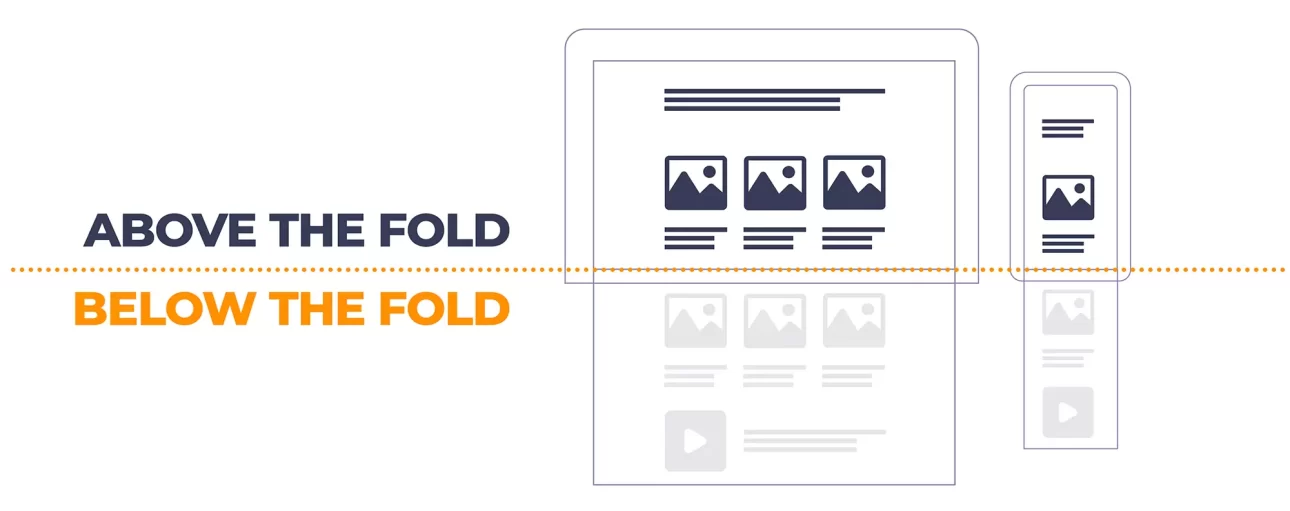
The LCP is not based on the download times of the largest element but on the rendering times of the largest element above the fold.
In other words, only the elements that appear in the landing screen on the user’s page, without the user having done any scrolling, are included in the LCP calculation.
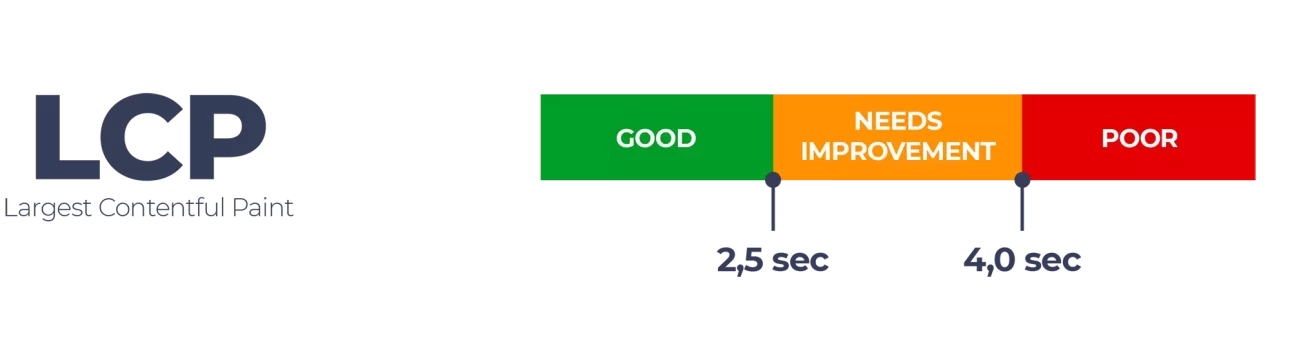
Google reccomends that the largest content above the fold loads in less than 2.5 seconds.
Big G considers the performance of content that loads between 2.5 and 4 seconds as acceptable but improvable, while content that takes longer than 4 seconds is bad.
How to improve LCP?
There are several factors that affect the performance of the metrics.
Optimising media files is undoubtedly the first activity to be planned to improve the LCP. Photos and videos, in particular, tend to be very heavy content, affecting rendering times.
A CDN is also valuable for optimising the Largest Contentful Paint.
The Content Delivery Network is a network of servers scattered around the world and connected to each other that enables content to be distributed more quickly. When the user accesses to a web page, the CDN directs the request to the server that is physically closest to it, allowing a faster response.
Other elements also contribute to a good LCP, such as the removal of any unused plugins present in website and e-commerce CMSs.
How effective THRON delivery minimises LCP
A DAM Platform that distributes directly to end channels is strategic for maximising the performance of the Largest Contentful Paint.
It is no coincidence that THRON offers several features in this respect.
First, the Real Time Image Editor (RTIE).
The features for optimising images during distribution helps reduce LCP because:
resizes images as required, avoiding unnecessarily heavy downloading of resources
automatically selects the optimal image format according to the user’s conditions, such as browser and device used
adapts the compression quality to further lighten the weight of resources.
Secondly, the CDN. THRON uses a worldwide distributed network that is elastic and scales automatically according to traffic volume.
FID – First Input Delay
This indicator measures how long it takes the browser to respond to user input.
How is it calculated?
Express in milliseconds (ms), the metric calculates the actual time between input and response provided.
User input is defined as, for example, clicking on a link, touching a button or using a custom control based on JavaScript code.
Actions such as zooming in on a page or scrolling are not covered.
You can measure the FID of your site from this page.
How to make Google happy?
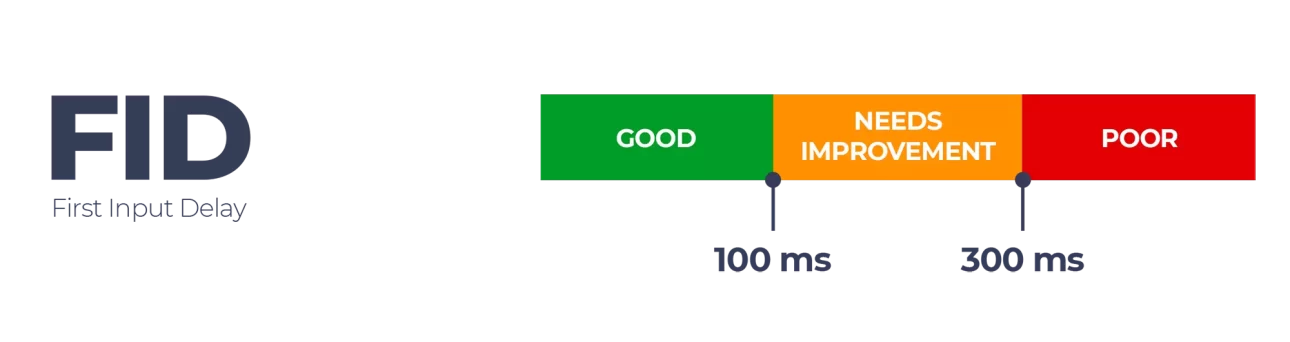
Keep in mind that a FID below 100 ms is considered optimal, between 100 and 300 ms can be improved, while above 300 ms is to be reviewed.
How can the FID be improved?
FID can be reduced by reducing the weight and complexity of the JavaScript code. In particular, the impact and execution time of JavaScript on the page should be reduced. A high FID often corresponds to a lack of optimisation in the way the code parses, compiles and executes the web page.
It is also advisable to reduce the impact of any third-party code.
How THRON’s effective delivery minimises FID
A DAM Platform that effectively distributes digital assets should pay attention to minimising FID.
Returning to the example of THRON’s delivery, the code libraries for THRON Universal Player – the player for distributing audio, images, video and documents on our platform – are minified and optimised to guarantee maximum performance in terms of page interactivity.
CLS – Cumulative Layout Shift
This indicator measures the stability of a website’s layout and thus the movement of elements and layout changes during navigation.
Advertising or newsletter subscription banners, videos or images such as those that appear when reading an online news item, often result in content shifting within a page, thus impacting the structure of the page. This results in poor page stability and poor UX.
How is it calculated?
Of the three Web Core Vitals, it is the most complex parameter to measure.
Expressed in space, it is given by the product of the impact component and the distance component, which respectively measure the size and displacement of elements on a web page.
In particular, considering the visibile area of the page uploaded:
the impact component is the sum of the space occupied before and after the movement of the unstable element. Considering, therefore, a web page which, on loading, has within it a block of text occupying 50% of the space and which, subsequently, moves downwards by 30%, the impact component is equal to 80%
the distance component is equal to the displacement of the unstable element. In the example, therefore, 30%.
Taking the data from the example, the CLS is 0.24, given by the product of 0.8 and 0.3.
You can measure the CLS of your site from this page.
How to make Google happy?
An optimal CLS is below 0.1. If between 0.1 and 0.25 it is improvable, while above 0.25 it is definitely penalising in SEO terms.
How to improve CLS?
Among the best practices recommended by Google to make CLS as low as possible is the optimisation of digital assets for mobile devices.
In particular, images at different resolutions should be included in web pages, taking care to include size and video attributes so that the browser then chooses the resolution most appropriate to the characteristics of the device being used.
Other aspects, such as optimisation of the web fonts used, also have a positive influence on CLS.
How the effective delivery of THRON minimises CLS
The distribution of digital assets, as already mentioned, has significant impacts on Web Core Vitals.
CLS included.
THRON’s delivery allows each piece of content to be distributed at maximum performance across all channels.
In particular, the RTIE, as discussed before, at the moment of publication, automatically chooses the most suitable image format with respect to the users’ conditions of use, browsers and devices (including mobile).
Performance and quality are thus always optimised. With great benefits for CLS reduction.
Would you like to receive content like this once a month?
Embark on a journey to NORTH together with over 4,500 human beings. With our newsletter you will receive data, trends and insights into the world of DAM, PIM and beyond every thirty days.