Universal Commerce Protocol: data consistency matters
Google has launched the Universal Commerce Protocol (UCP), an open standard developed together with Shopify, Walmart, Target, Etsy, and Wayfair that enables AI agents to manage the entire online purchase journey: from product search to payment, through to shipping and returns. The protocol already works on AI Mode in Google Search and on Gemini, and is supported by over 20 global partners including Visa, Mastercard, Stripe, and American Express.
For those managing e-commerce, catalogs, or brand communications, the message is clear: the quality of product data and digital assets becomes the prerequisite for being discovered and selling within AI-powered experiences. This article explains what UCP is, how it works in practice, and how to prepare.
Table of Contents
What is Google’s Universal Commerce Protocol (UCP)
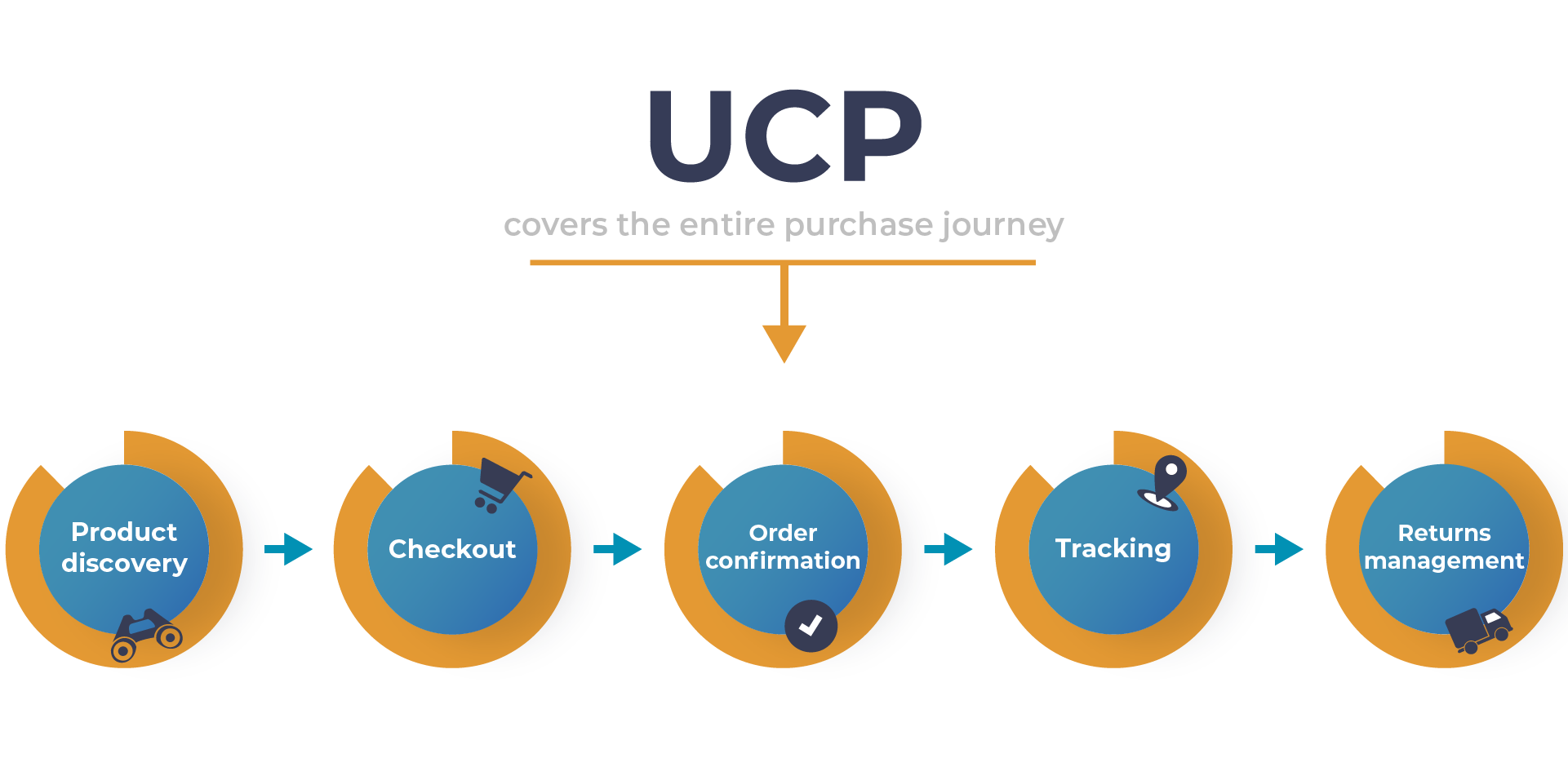
The Universal Commerce Protocol is an open, open-source standard, presented by Google on January 11, 2026 during the National Retail Federation. It creates a common language between AI agents, e-commerce platforms, and payment systems, designed to cover the entire purchase cycle: product discovery, checkout, order confirmation, tracking, and returns management.
Until now, connecting an AI agent to an online store required custom integrations. UCP eliminates this fragmentation with a single protocol, compatible with already widespread standards like Agent2Agent (A2A), Agent Payments Protocol (AP2) and Model Context Protocol (MCP).
Simply put: UCP is a set of shared rules that allows any AI agent to “talk” with any online store without needing custom connections.
Where it comes into play: AI Mode and Gemini
The first practical use of UCP happens within AI Mode in Google Search and in the Gemini app. Here the AI agent doesn’t return a list of links: it interprets a request, compares products, checks prices and availability, and can complete a purchase without the person ever visiting the seller’s site.
This model is called agentic commerce, or conversational shopping: the AI acts on behalf of the buyer, with direct payment within the conversational experience via Google Pay and Google Wallet.
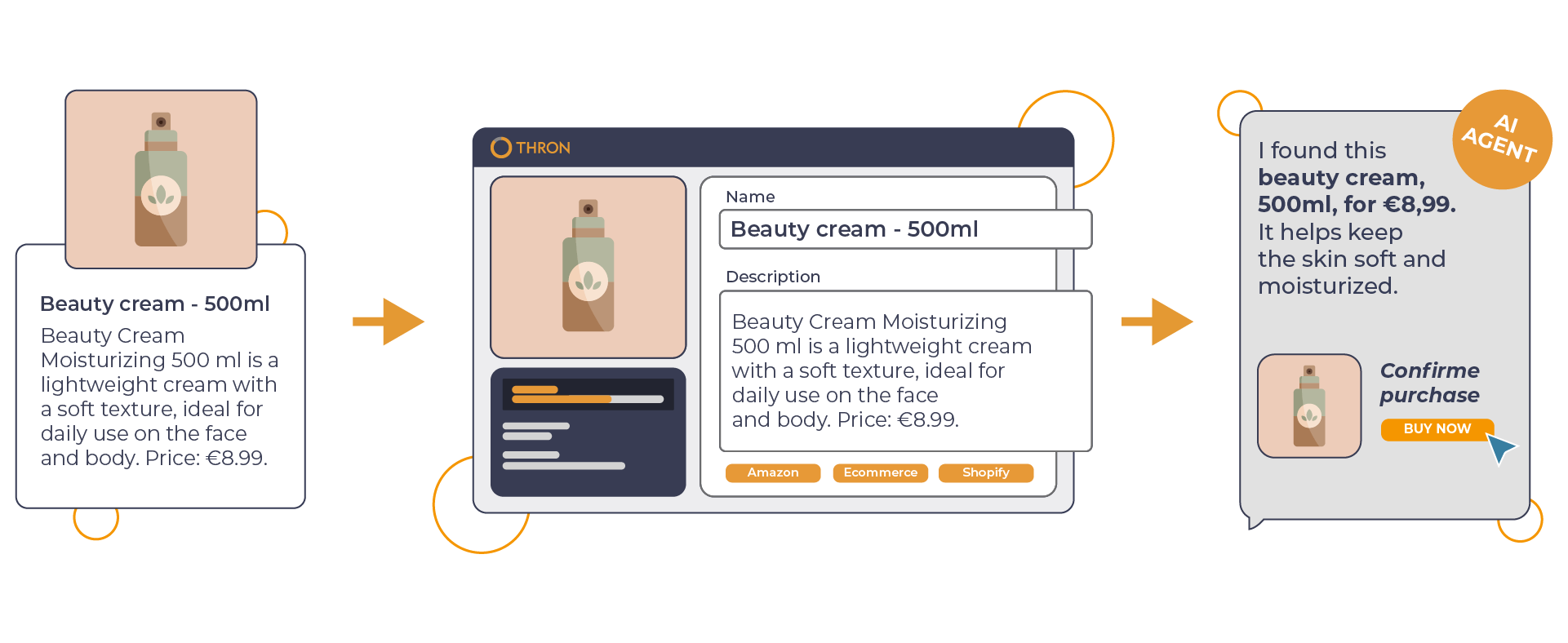
The operational consequence is that the purchase decision shifts “upstream” of the e-commerce site. If product data isn’t complete, up-to-date, and consistent across channels, the agent doesn’t propose that product. There’s no longer a landing page, no second chance to convince: either the data is ready, or the sale doesn’t happen.
How UCP works (simple flow)
Sellers publish an AI-readable profile on their site (at the address /.well-known/ucp), declaring the services they offer: checkout, order management, discounts, accepted payment methods. The AI agent reads this profile, verifies what’s compatible with its own capabilities, and initiates an automated negotiation called capability discovery.
At that point a purchase session opens: the agent checks stock and prices in real time, can apply discount codes and manages payment through tokenization, protecting payment data by replacing it with a temporary code. After the order, the protocol covers the entire order lifecycle: confirmation, shipping tracking, returns and refunds, with automatic notifications sent from the system to the store (the so-called webhooks).
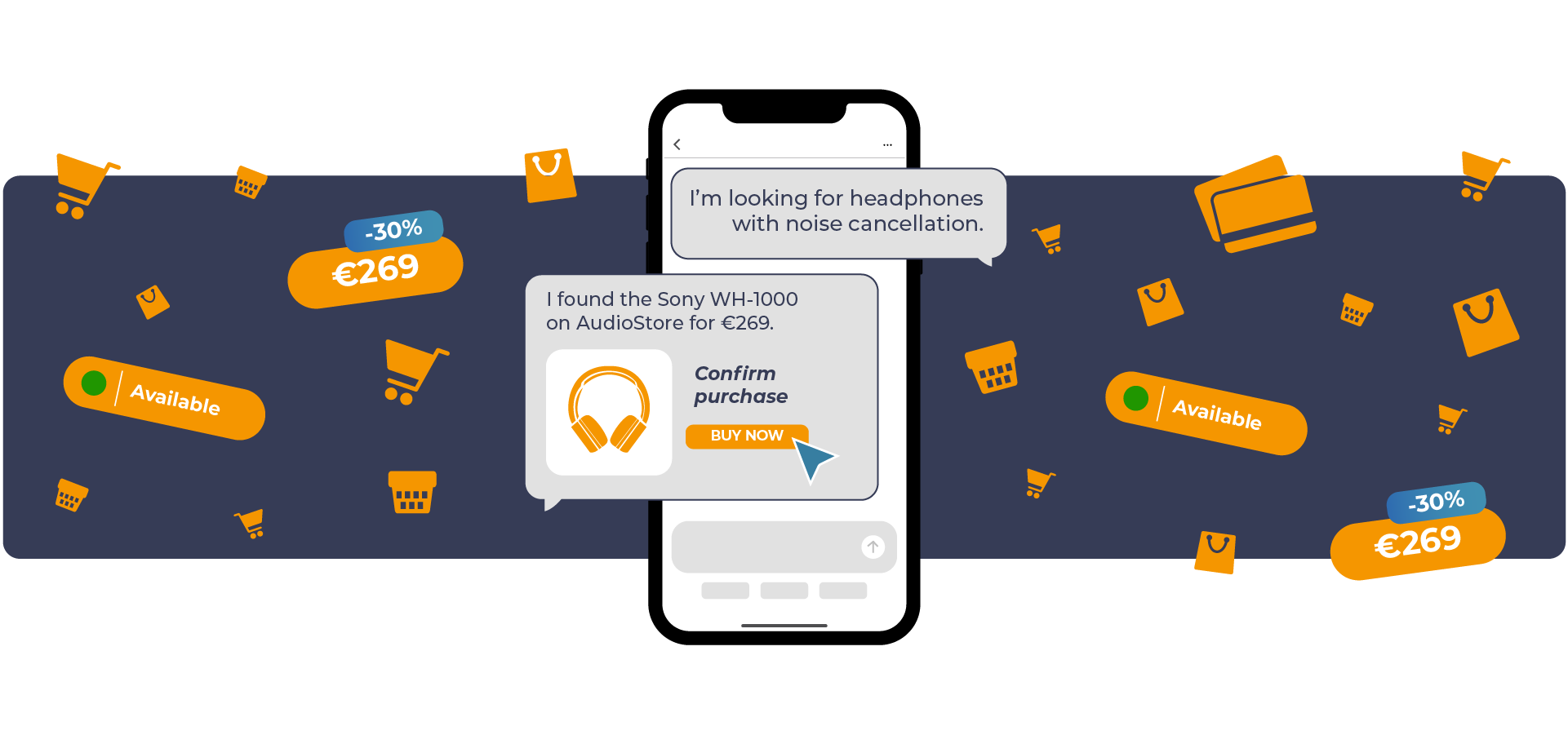
An example: a user asks “looking for noise-canceling headphones”. The agent reads the store’s UCP profile, checks availability and active promotions, adds the product to cart, and completes payment with the person’s digital wallet. All in a few seconds, without ever opening the website.
The same mechanism applies to any sector working with a product catalog. In retail and e-commerce the advantage is immediate: fewer abandoned carts, purchase completed within the AI experience, zero transitions between platforms. The same goes for companies in design or ceramics, where product discoverability is essential: an architecture firm searching for “porcelain stoneware with stone effect for bathroom” could receive the answer directly from an AI agent, which queries manufacturers’ catalogs, compares formats and availability, and proposes the most suitable solution.
Universal Commerce Protocol: what changes for merchants?
Merchant Center: requirements and attributes, including native_commerce
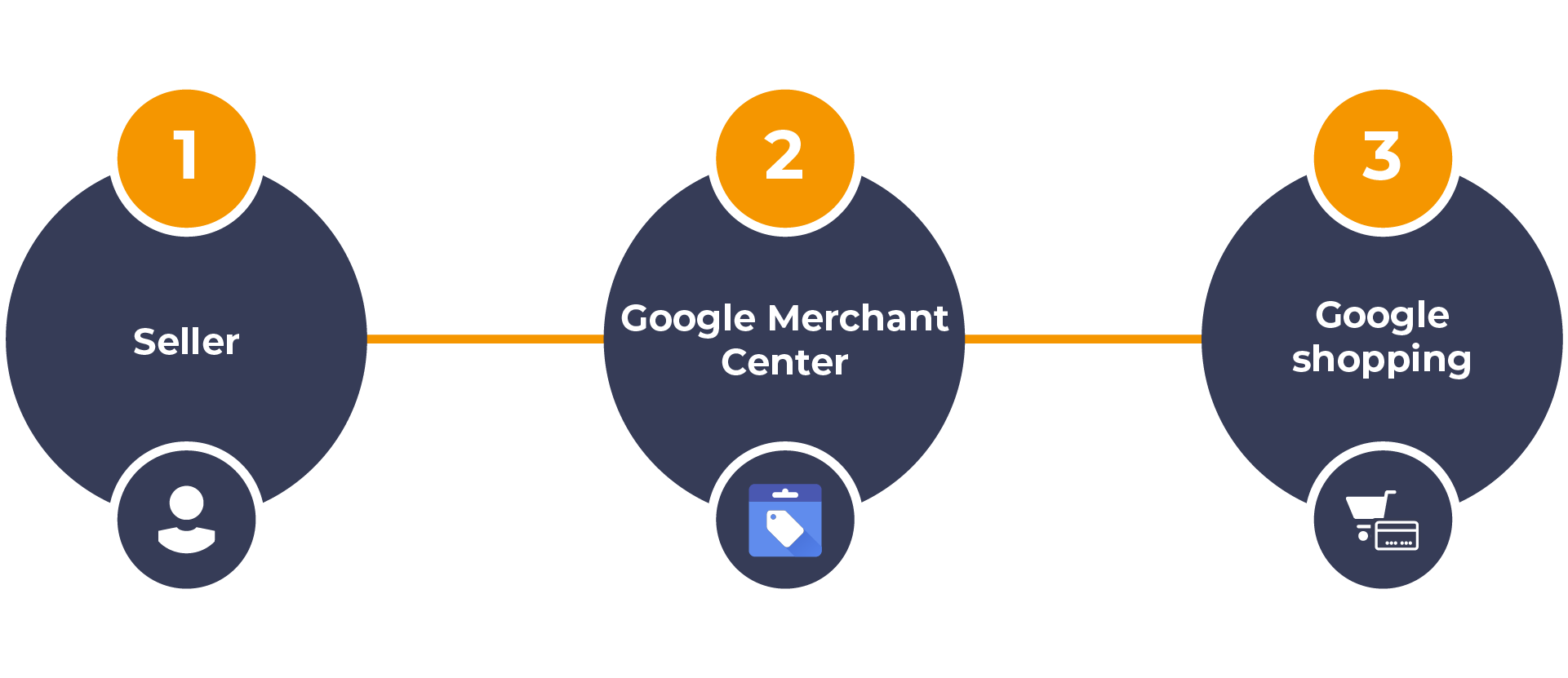
All UCP requirements and new attributes point in the same direction: complete product data, high quality and consistent across every channel. Google Merchant Center is Google’s free tool where sellers upload and manage information about their products (prices, availability, images, descriptions) to make them visible on Google Shopping and other Google surfaces. For UCP, it remains the starting point. Complete and updated product feeds (prices, availability, shipping and return policies, customer support contacts) are the basic requirement for eligibility. Google has introduced dozens of new attributes designed for conversational shopping: answers to frequently asked questions about products, compatible accessories, substitute products.
The native_commerce attribute, for example, signals that the seller is available for native checkout within AI Mode and Gemini. Those already using free listings, the free product cards that Google shows in search results, have an advantage: they already have a data foundation to build on.
Native checkout vs Embedded checkout: differences and use cases
Native checkout integrates payment logic within the AI interface via API. It’s the recommended path for accessing the most advanced features, like multi-product carts and loyalty programs. Embedded checkout instead loads the seller’s interface in a frame integrated into the page, and is designed for those with customized flows or specific branding needs.
In both cases the seller remains the Merchant of Record: maintains complete control over data, customer relationships, and terms of sale. Google never becomes the seller.
Payments and trust: Google Pay/Wallet and implications
UCP handles payments through tokenization with Google Pay and Google Wallet. A Google Pay button on the site isn’t necessary: it’s enough that the PSP, the provider that manages online payments on behalf of the seller (for example Stripe, Adyen or Nexi), can process tokens. Most global PSPs are already compatible. PayPal will also be available soon.
Identity linking (OAuth): when it’s needed and what it enables
For personalized experiences, UCP provides for account linking of buyers via OAuth 2.0. This means sellers can recognize the person and offer them benefits tied to their loyalty program, dedicated price lists, or access to order history, all within the AI experience.
The linking works only with explicit consent from the person. At the moment this feature is on the roadmap: Google plans to release it in the coming months of 2026, along with multi-item carts, support for the Gemini app, and advanced post-purchase assistance.
SEO impact: from ranking to “readability” for agents
With agentic commerce, the concept of visibility changes. Classic ranking factors (keywords, links, text quality) remain, but a new layer is added: the ability of product data to be read and used by AI agents to make a purchase decision.
An agent queries product feeds, UCP profiles, and structured data. If this information is incomplete, inconsistent across channels, or updated with delays, the product isn’t proposed. Product data and digital assets no longer support the purchase experience: theyarethe purchase experience.
The problem, for many companies, is that this data and content currently lives fragmented across the frontends of various channels: one version on the website, a different one on the marketplace, yet another in the PDF catalog. Each channel has its own copy, often out of sync. In a world where an AI agent queries these sources and compares them in real time, every misalignment becomes a reason for exclusion.
It’s the same mechanism that GEO (Generative Engine Optimization) has made evident for editorial content: the language models underlying LLMs like Gemini or Perplexity, when they need to generate an answer, select and cite the most coherent and reliable sources. If information is contradictory across sources, it gets discarded. The same thing happens with product data. An AI agent that finds one price on Merchant Center and a different price on marketplaces has no way to determine which is correct, and therefore moves on.
The consistency of information, messaging, and data across all channels isn’t a technical optimization: it’s the prerequisite for existing in an AI model’s responses, whether it’s a blog article or a product sheet.
According to McKinsey, by 2030 the US retail market could generate up to 1 trillion dollars orchestrated by agentic commerce. Those who control the quality, structure, and consistent distribution of assets and product information across all channels find themselves in a position of advantage. This is the space where those like THRON operate, combining DAM and PIM in a single intelligent platform: one source for digital assets, product data, and channel activation.
Final UCP Checklist: what to do today
The first UCP features are being tested in the United States. Expansion to Europe is expected in 2026, without official dates. Preparing now means being ready when the protocol arrives in Italy as well.
Verify that your Google Merchant Center account is complete, accessing the “Diagnostics” section to identify errors or missing data: product feed, shipping and return policies, customer support contacts.
Enrich product sheets with conversational attributes: answers to frequently asked questions, related products, accessories, substitutes.
Check data consistency between your website, Merchant Center, and all other channelsin the selling process. Platforms that unify digital asset management and product data with distribution across all channels, such as THRON, reduce the risk of misalignment at the source.
Ensure that checkout supports tokenization (Google Pay or compatible PSP).
Define who on the team has responsibility for product data: marketing, e-commerce, IT, or a cross-functional group. Centralizing assets and product information in a single platform simplifies this governance, especially when there are many channels to feed.
But this preparation goes beyond the single protocol.
Protocols and AI agents are becoming a new layer of intermediation between brands and people. The more quality data they receive, the longer they keep people on their platforms. And the longer they keep them, the more they monetize their attention, through ads and offers integrated into the experience. There’s a dual level: driving consumption of more interactions (to show more ads) and facilitating immediate purchase (to take a cut of the transaction).
Those who have governance over digital assets and product data will be able to leverage the opportunities of agentic commerce without becoming dependent on it.
“An AI agent doesn’t visit your website, it reads product data. THRON Platform delivers them complete and consistent across every channel, from a single source. When the agent makes a recommendation, your product is there.”
Davide ChiarottoCEO and Chief Product Officer at THRON
Frequently Asked Questions (FAQ)
What is the Universal Commerce Protocol (UCP)?
An open standard from Google that allows AI agents to manage the entire online purchasing journey through a shared language between sellers, AI platforms, and payment providers.
Where is UCP used and what does it enable?
It works on AI Mode in Google Search and on Gemini. It enables direct checkout within the AI experience, without the person having to visit the seller’s site.
Where do you start to implement it?
From Google Merchant Center: complete product feeds, updated policies, consistent data across all channels. No immediate technical interventions are needed, but systematic work on data quality is essential.
What is native_commerce and why is it important?
It’s the attribute in Merchant Center that signals availability for native checkout within Google’s AI surfaces. It makes products directly purchasable from AI Mode and Gemini.
What’s the difference between Native and Embedded checkout?
Native checkout handles payment within the AI interface via API. Embedded loads the seller’s interface in an integrated frame on the page, for customized flows. In both cases the seller remains the Merchant of Record.
What payments does it support (Google Pay/Wallet)?
Google Pay and Google Wallet via tokenization, with PayPal coming soon. The PSP (the provider that handles online payments) must be compatible with Google tokens.
Does Google become the seller (Merchant of Record)?
No. The seller remains the Merchant of Record in every UCP transaction. They maintain complete control over data, customer relationships, and terms of sale.
Is UCP an open standard? Where can you find the specification?
Yes, it’s open source. The complete specification is published on ucp.dev and hosted on GitHub.
Does UCP change SEO for e-commerce?
Yes. Visibility no longer depends solely on ranking in SERPs: the quality, completeness, and consistency of product data determine whether an AI agent will recommend that product.
Is UCP available in Italy?
Not yet. The first features are being tested in the United States. Expansion to Europe is expected during 2026, with no official timeline.
Would you like to receive content like this once a month?
Embark on a journey to NORTH together with over 4,500 human beings. With our newsletter you will receive data, trends and insights into the world of DAM, PIM and beyond every thirty days.